
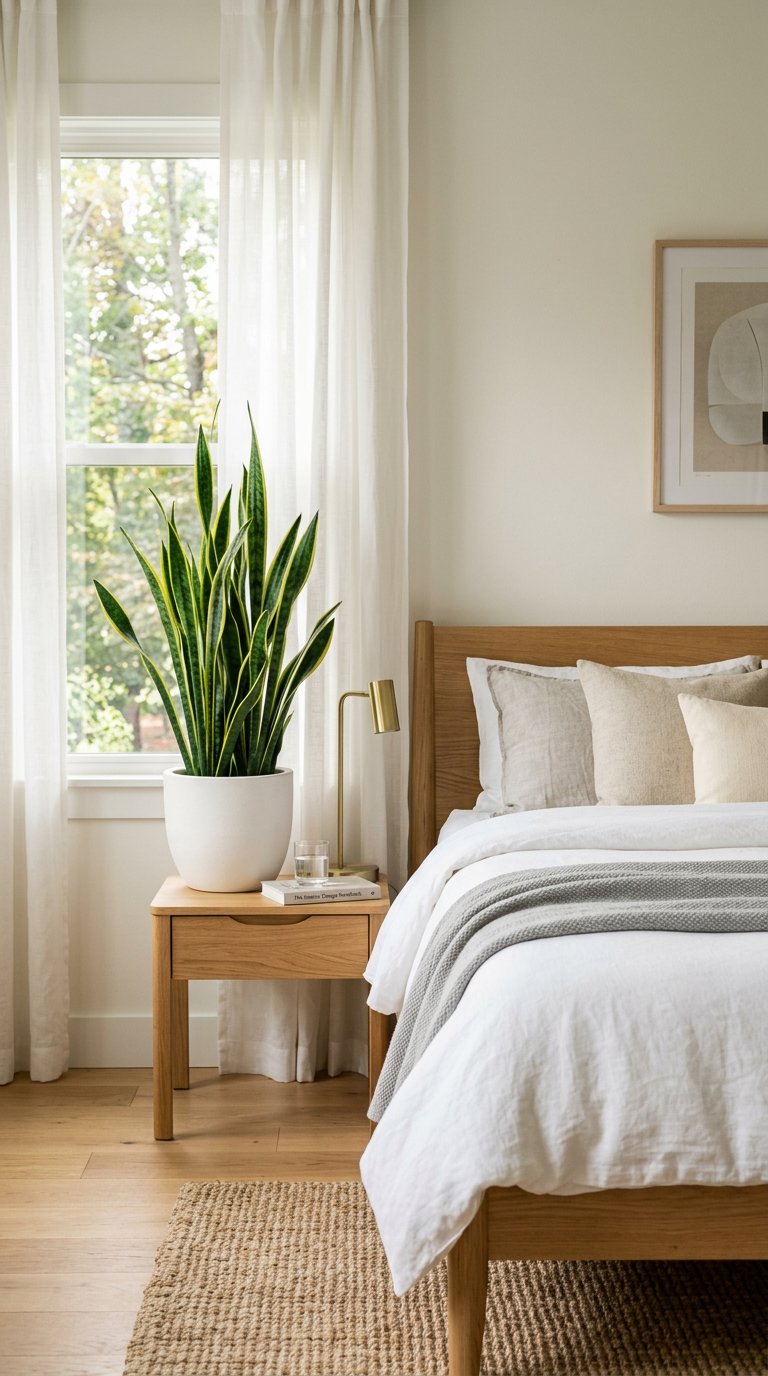
Why the Snake Plant Deserves a Spot in Your Bedroom
If you could only keep ONE houseplant, plant experts would tell you to pick the snake plant (Sansevieria, also called mother-in-law’s tongue). It’s nearly impossible to kill, it works while you sleep literally releasing oxygen at night and it quietly filters harmful toxins from your bedroom air.
In this guide, you’ll discover 9 science-backed snake plant benefits, a super-simple care routine for beginners, and 3 free ways to turn one plant into many. Let’s grow! 🌿
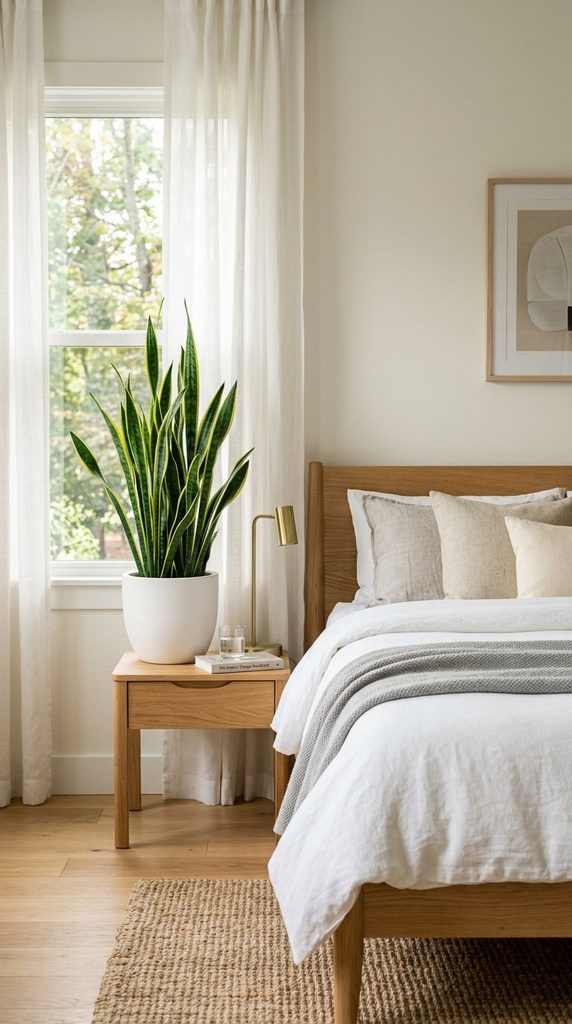
Quick Answer: The snake plant is one of the best bedroom plants because it converts CO2 into oxygen at night (unlike most plants), filters indoor air toxins like formaldehyde and benzene, needs very little light and water, and is proven to reduce stress. Keep one in your bedroom for better sleep and cleaner air.
9 Science-Backed Snake Plant Benefits
1. Releases Oxygen at Night (Better Sleep Naturally) 😴
Most plants release oxygen during the day. The snake plant is special — it uses CAM photosynthesis, which means it keeps producing fresh oxygen through the night. More fresh oxygen near your bed = better sleep quality and fewer morning headaches.
Tip: Place one medium snake plant on your nightstand or within 6–8 feet of your bed.
2. Filters Harmful Toxins From Indoor Air 🌬️
The famous NASA Clean Air Study found that snake plants remove toxins like formaldehyde, benzene, xylene, and toluene — chemicals released by furniture, paint, and cleaning products. Your bedroom air becomes noticeably fresher within weeks.
Tip: For a standard bedroom, 2 plants (8–10 inch pots) give the best air-cleaning effect.
3. Reduces Stress and Anxiety 🧘
A review of 42 studies found that simply being around indoor plants lowers stress, improves mood, and boosts calm. The snake plant’s tall, sculptural leaves add a peaceful green presence perfect for a relaxing bedroom.
Tip: Looking at greenery for even a few minutes after waking up can set a calmer tone for your day.
4. Improves Focus and Productivity 💻
Cleaner air means better concentration. Whether it’s your bedroom work corner or a home office, a snake plant nearby helps you stay alert. That’s why it’s one of the most popular office desk plants in the world.
5. Almost Impossible to Kill (Perfect for Beginners) 🪴
Forgot to water for 3 weeks? Low light room? The snake plant shrugs it off. It stores water in its thick leaves and survives neglect that would kill most houseplants. If you’ve killed every plant before — this is your comeback plant.
6. Adds Natural Humidity to Dry Rooms 💧
Snake plants release moisture through their leaves, gently raising humidity. This helps with dry winter air, scratchy throats, and dry skin — especially in air-conditioned bedrooms.
7. Beautiful, Modern Decor on a Budget 🏡
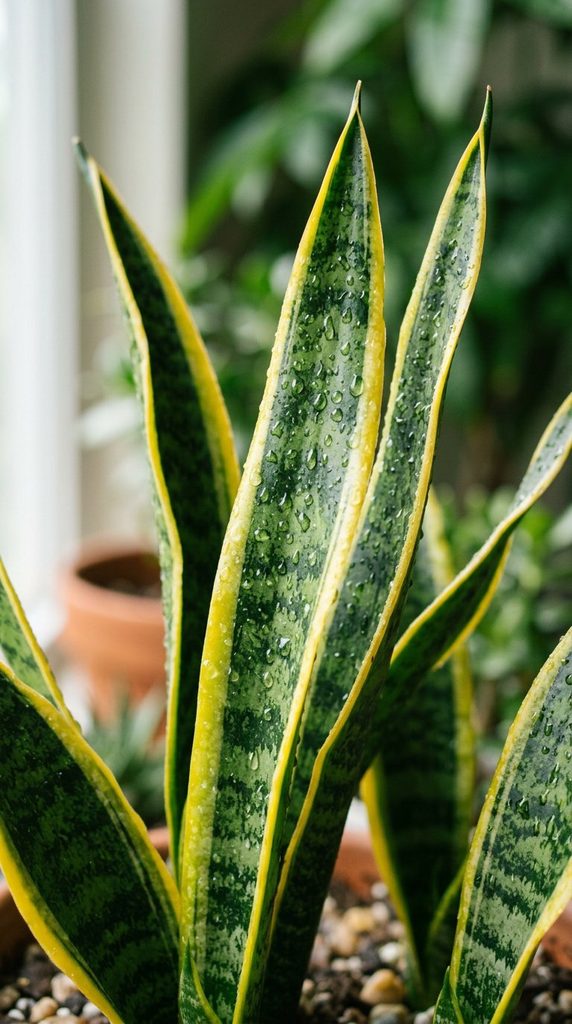
With its bold upright leaves and yellow edges, the snake plant looks like a designer piece — but costs very little. It fits every style: minimalist, boho, modern, or classic. One plant instantly upgrades a boring bedroom corner.
8. Low Allergy Risk 🤧
Unlike flowering plants, snake plants don’t release pollen into your room. Their smooth upright leaves also collect less dust than fuzzy-leaf plants. Just wipe the leaves once a month and you’re good.
9. One Plant Becomes Many — For Free! 🎁
A single snake plant can be divided into several new plants, or grown from a single leaf cutting. Propagate them as gifts, or fill your whole home without spending another rupee/dollar. (3 easy methods below!)
Snake Plant Care: The 5-Minute Beginner Routine
Here’s the complete care cheat-sheet. Honestly, the #1 rule is: leave it alone more than you think.
| Need | What To Do |
|---|---|
| Light | Tolerates low light, thrives in bright indirect light. Avoid harsh direct afternoon sun. |
| Water | Every 2–3 weeks. Water ONLY when soil is 100% dry. Overwatering is the #1 killer! |
| Soil | Well-draining cactus/succulent mix. Normal garden soil holds too much water. |
| Pot | MUST have drainage holes. Terracotta pots are best (they breathe). |
| Temperature | Happy between 15–30°C (59–86°F). Keep away from frost. |
| Fertilizer | Half-strength liquid fertilizer, once a month in spring/summer only. Skip in winter. |
⚠️ Yellow mushy leaves? You’re overwatering. Let the soil dry completely, remove mushy leaves, and water less. Yellow dry crispy tips? Slightly underwatered or too much direct sun — easy fix.
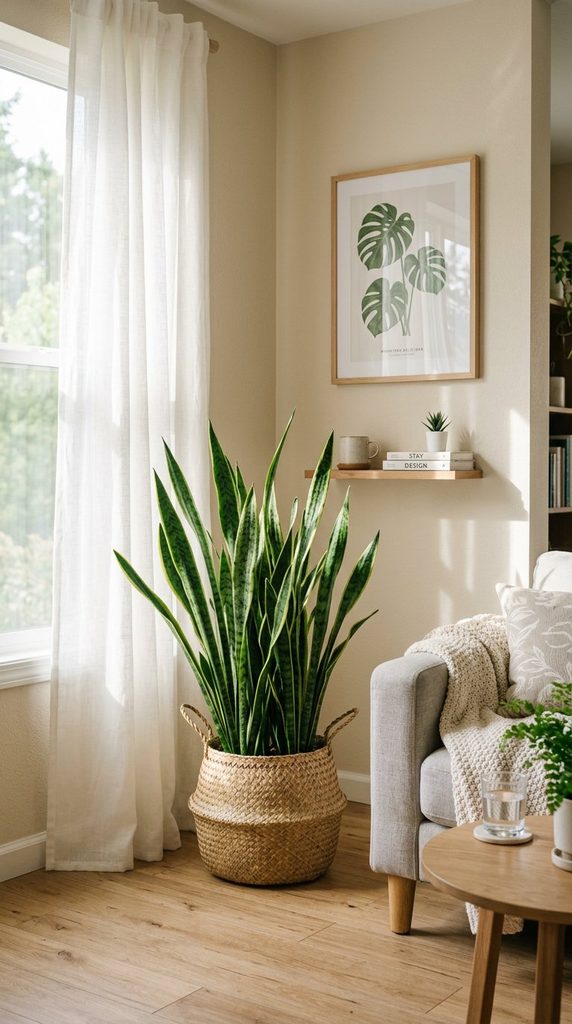
How to Propagate Snake Plant (3 Free Methods)
Method 1: Division (Fastest — Instant New Plants) ⭐ Recommended
- Take the plant out of its pot and gently loosen the roots.
- Find natural clusters (each with leaves + roots) and pull apart — or cut with a clean knife.
- Plant each cluster in its own pot with fresh soil. Water lightly. Done in 10 minutes!
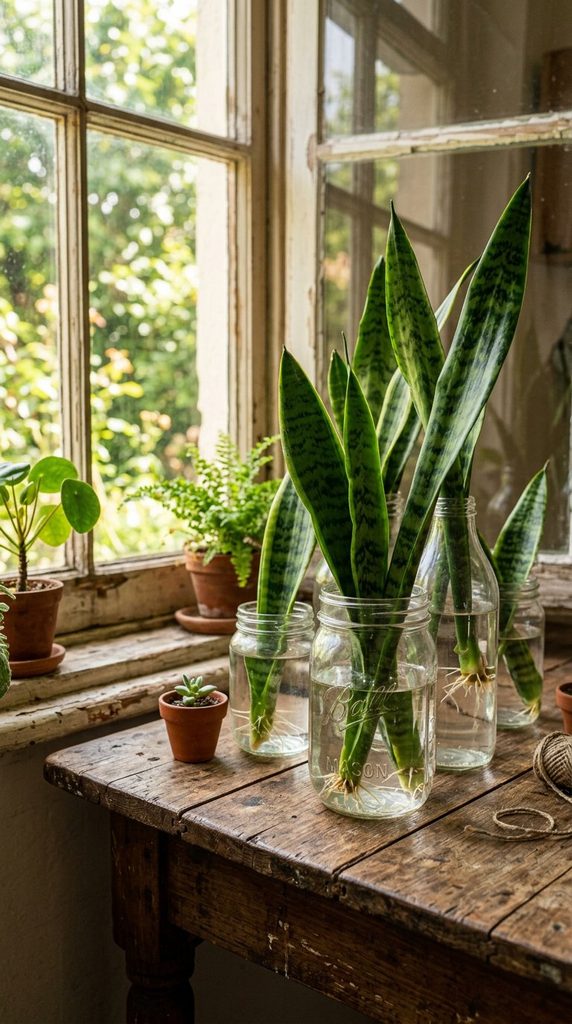
Method 2: Leaf Cuttings in Water (Most Fun to Watch)
- Cut a healthy leaf into 3–4 inch pieces. Remember which end was DOWN (mark it!).
- Place pieces (bottom-end down) in a jar with 1–2 inches of water.
- Keep near bright indirect light, change water weekly. Roots appear in 3–6 weeks, then plant in soil.
Method 3: Leaf Cuttings in Soil (Set and Forget)
- Cut leaf pieces as above, let them dry for 1 day (this prevents rot).
- Push the bottom end 1 inch into moist succulent soil.
- Water sparingly. New pups sprout in 6–8 weeks. Patience = free plants!
Frequently Asked Questions
Is a snake plant good for the bedroom?
Yes! It’s one of the best bedroom plants because it releases oxygen at night, filters air toxins, and needs almost no care. Keep it 6–8 feet from your bed.
How often should I water my snake plant?
Every 2–3 weeks, only when the soil is completely dry. In winter, once a month is enough. When in doubt — don’t water.
Can snake plants survive in rooms with no windows?
They tolerate very low light for months, but for long-term health, give them at least some indirect light or a few hours near a window weekly.
Are snake plants safe for pets?
No — snake plants are mildly toxic to cats and dogs if chewed. Keep them on high shelves if you have curious pets. (Pet-safe alternatives: spider plant, parlor palm.)
Why are my snake plant leaves falling over?
Usually overwatering (mushy base) or very low light (weak floppy growth). Fix watering first, then move to brighter indirect light.
Final Thoughts
The snake plant isn’t just decoration it’s a silent nighttime helper that gives you cleaner air, better sleep, and calmer vibes while asking for almost nothing in return. Start with one plant in your bedroom, follow the lazy care routine above, and propagate free babies within months.
Found this helpful? Save it to your plant board 📌 and check our next guide: 12 Best Air-Purifying Indoor Plants!
🌿 Note: This article is for educational purposes only. Plant air-purifying effects are based on lab studies (including the NASA Clean Air Study); real-home results vary with plant size, count, and ventilation. Snake plants are mildly toxic if ingested by pets or children — keep out of reach.