
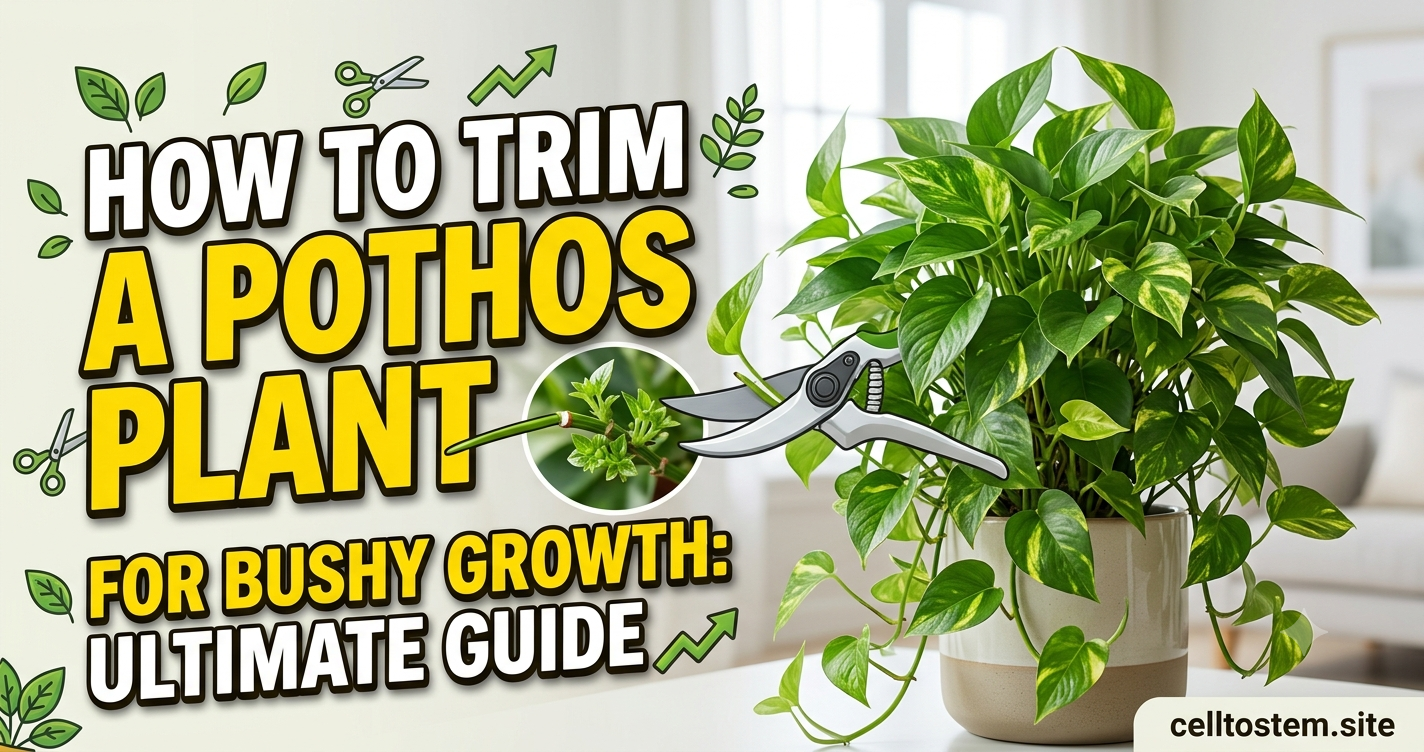
Quick Answer: How to Trim a Pothos Plant
The best way to trim a pothos plant is by using sharp, clean scissors or pruning shears to cut the vines just below a node (the small bump where a leaf grows). Trimming is necessary to manage size, shape the plant, encourage bushier growth (rejuvenation), and remove any dead or yellow leaves. The ideal time for major pruning is during the spring and summer when the plant is actively growing. The resulting pothos vine cuttings can be easily propagated in water to create new plants.
Pothos plants (Epipremnum aureum) are among the toughest and most beautiful houseplants you can own. Their cascading vines and heart-shaped leaves make them a favorite for shelves, hanging baskets, and office desks. But even the easiest-going plant needs a little maintenance. If your beautiful vine has started to look sparse, or if it’s simply taking over your living room, it’s time to learn how to trim a pothos plant.
This article will show you the exact steps. This is the best way to trim a pothos for beginners who want a healthy, beautiful, and bushy plant.
The Most Realistic Trimming Process: Starting the Cut
When we talk about pruning pothos, we aren’t just cutting randomly. The goal is to direct the plant’s energy and manage its growth. Knowing how to trim a pothos plant correctly involves identifying the key parts of the plant and understanding where to make your cuts.
Before you start, gather the best tools for pruning pothos plants. You don’t need anything fancy. A sharp pair of household scissors, small pruning shears, or even a clean razor blade will work perfectly. The key word is clean. Always sterilize your tools with rubbing alcohol before you begin. This prevents the spread of bacteria or fungi to your freshly cut plant.
Let’s look at exactly how and where the first cut happens.
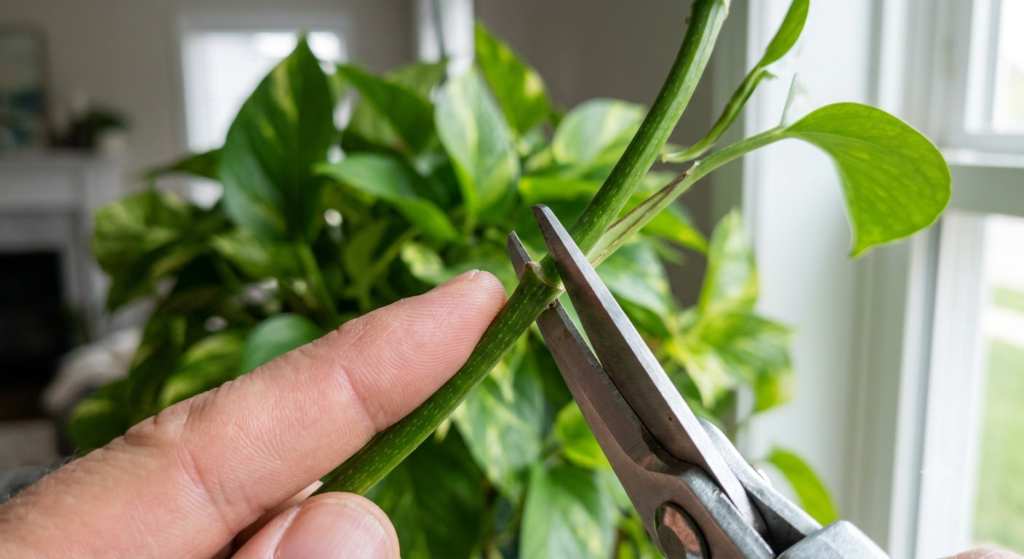
When you are learning how to trim a pothos plant, remember this: your cut will usually encourage new growth from the node above where you trimmed. If you cut high, the plant continues its vine. If you cut the whole vine back closer to the soil, it forces the plant to push out new stems from the base, which is how you achieve pothos plant shaping and a bushier appearance.
Why Should You Trim Your Pothos?
You might be wondering if your plant actually needs this pothos plant maintenance. In the wild, pothos is a vigorous climber. In your home, it will continue that vigorous growth, but sometimes it grows in ways we don’t love. Here are the three main reasons to trim:
1. Rejuvenation and Bushiness
Over time, a pothos can become “leggy.” This means it has long, bare stems with very few leaves. Trimming is the best method to trim a leggy pothos. By cutting back the long, leafless vines, you activate the dormant buds at the nodes closer to the pot. This leads to pothos plant rejuvenation, resulting in a much fuller, bushier plant.
2. Propagation: Free Plants!
The best side effect of knowing how to trim a pothos plant is propagation. Every long vine you cut off is a potential new plant. The parts you cut are called “cuttings,” and they readily grow roots in water. The active growing season, spring and summer, is the best time to trim pothos for propagation.
3. Basic Plant Health
You should always remove any leaves that are completely yellow, brown, or showing signs of disease. Pothos leaf trimming is a routine part of ensuring overall pothos plant health. Discolored leaves can’t recover, and they sometimes use energy the plant could use elsewhere.
Where to Make Your Cuts: Understanding the Node
The most important part of learning how to trim a pothos plant is identifying the node. The node is that slight thickening or bump on the vine where a leaf grows. Crucially, it’s also where new roots will grow.
For any successful trim, whether for shaping or propagation, your cut must occur on the stem, just below a node. (Specifically, about 1/4 inch below, as shown in the previous section’s image). This is a foundational element of best pruning techniques for pothos.
If you are only doing pothos leaf trimming (removing a single yellow leaf), you can cut the individual leaf stem (the petiole) right where it joins the main vine. But if you want to shorten the vine or propagate, you must cut the vine itself below the node.
We can see the importance of the node during the next logical phase of maintenance.

The Ultimate Beginner’s Method: A Step-by-Step Guide
Here is a straightforward method on how to trim a pothos plant for fullness and propagation. This is the best way to trim a pothos for beginners.
Step 1: Sanitize Your Tools
Before you touch your plant, make sure your scissors or shears are clean. Wipe them down thoroughly with rubbing alcohol. This prevents any disease transfer.
Step 2: Choose Your Vines
Examine your plant. Are there extremely long vines taking over? Is there a vine that has lost many leaves (a leggy vine)? Decide how much you want to remove. A good rule of thumb is never to remove more than 25-30% of the plant’s total foliage at once.
Step 3: Identify the Node and Make the Cut
Follow a vine down to where you want to make the cut. Find the nearest leaf node. Position your clean shears just below the node (closer to the tip of the vine, not the main pot). Cut cleanly through the stem. The main plant now has a new, clean end, and you have a pothos vine cutting.
Step 4: Shape the Main Plant
Continue this process on other vines until you are satisfied with the pothos plant shaping. For pothos plant rejuvenation on a very leggy plant, you may need to cut major vines back much closer to the soil line (always leaving at least 1-2 nodes on the remaining stem near the pot). This encourages new, bushy growth right from the base.
Step 5: Clean Up and Propagate
Remove any individual yellow or dead leaves using your pothos leaf trimming technique. Now you are left with your main, newly shaped plant, and a collection of cuttings.
Take your cuttings and prepare them for water propagation. Ensure each cutting has at least one node. If a cutting is very long, you can segment it into smaller 4-6 inch pieces, making sure each piece has a node. This is a crucial detail of proper best pruning techniques for pothos.
After Trimming: Post-Pruning Care
Your plant will be just fine after a trim. In fact, it will likely be happier! But proper care after pruning pothos can help it recover and thrive.
Light Conditions
The best light conditions for trimmed pothos are bright, indirect sunlight. Avoid direct, harsh sun, which can scorch the new cuts or the remaining leaves. Pothos can tolerate lower light, but they will grow much faster and stay fuller if they get good, indirect light.
Fertilizing
Your plant might appreciate a snack. Wait about a week after trimming to let the cuts calloused over, then you can apply a balanced, water-soluble houseplant fertilizer. This is the best fertilizer after trimming pothos to support the surge of new growth that often follows pruning. Do this only during the active growing season (spring/summer).
When to Repot (and Soil)
Trimming is also a great time to evaluate if your plant is root-bound. If it is, you might combine pruning with repotting. For best results, use a well-draining potting mixture; the best soil for repotting trimmed pothos is a high-quality potting mix amended with perlite or orchid bark to ensure excellent drainage. Pothos hate sitting in soggy soil.
Note: You can read more about repotting in our other guides.
The final image will show the result of proper care.

By mastering how to trim a pothos plant, you take control of your plant’s health and beauty. Don’t be afraid to make those cuts! Pothos are incredibly resilient, and they will almost always reward your efforts with a fuller, bushier, and more vibrant display.