
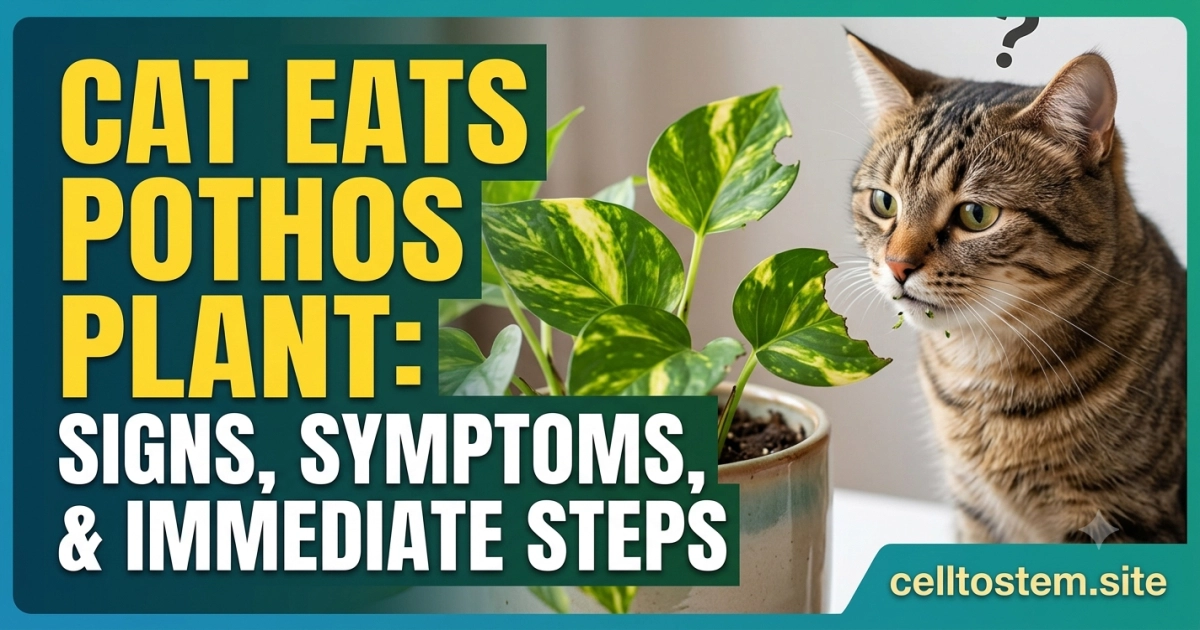
Imagine coming home, keys in hand, ready for a cozy evening. You walk into your living room and stop cold. Your beautiful, cascading pothos plant—the one you’ve painstakingly grown for years—is hanging askew. On the floor lie a few mangled leaves and some chewed stems. Then, you see your cat. He looks fine, but your heart starts to race. What happens if a cat eats a pothos plant? Is it dangerous? Do I need to rush him to the emergency vet? This is the moment panic sets in, but knowledge is your best friend right now.
The truth is, many common houseplants are poisonous to pets. Pothos (scientific name Epipremnum aureum), also known as Devil’s Ivy, is one of the most popular indoor plants because it’s so easy to keep alive. It’s hardy, handles low light, and cleans the air. Unfortunately, this beautiful trailing plant is also highly toxic to our feline friends.
In this guide, we will break down exactly what happens if a cat eats a pothos plant. We’ll discuss why it’s poisonous, the specific symptoms to watch for, what to do in the immediate aftermath, and how to treat your cat for potential poisoning. As someone who has worked extensively in plant care and feline health education, I want to provide you with the clarity and steps you need. We’ll also explore some fantastic, safe alternatives to pothos that will let you keep your indoor jungle while ensuring your kitty stays healthy.
Understanding Why Pothos is Toxic to Cats
Before we get into the symptoms, it’s crucial to understand the why. Pothos plants aren’t just “unhealthy” like eating junk food; they contain specific toxic compounds designed by nature as a defense mechanism against herbivores.
The entire plant—the leaves, the stems, and the roots—contains tiny, needle-like crystals called insoluble pothos plant calcium oxalate crystals.
How the Crystals Work (The “Microscopic Needle” Theory)
Picture thousands of microscopic, sharp needles. When your cat chews on a leaf or stem, their teeth break the plant cells. This action releases these tiny calcium oxalate crystals. These crystals, often shaped like raphides (sharp bundles of needles), don’t simply get digested. Instead, they are violently ejected from the plant cells, embedding themselves into the soft tissues of your cat’s mouth, tongue, throat, and, if swallowed, the esophagus and stomach.
This isn’t a chemical burn; it’s a mechanical injury occurring at a microscopic level. Imagine swallowing a thousands of tiny, jagged glass shards. This action causes immediate, intense pain and swelling, which is the root cause of almost all the symptoms that follow.
Immediate Symptoms If Your Cat Eats Pothos
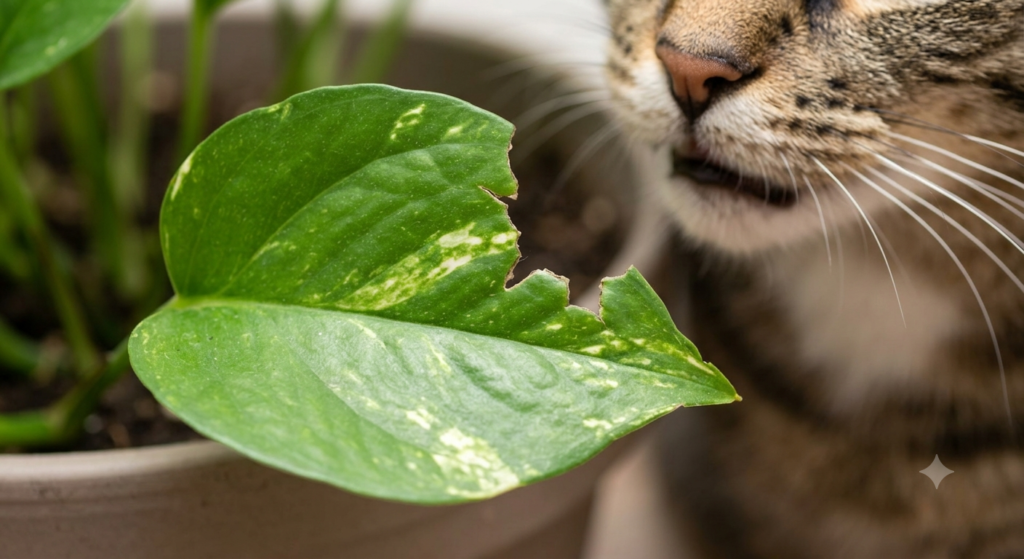
When your cat chews on a pothos, the body’s reaction is almost instantaneous. Because the “poisoning” is mechanical, the pain starts the moment the crystals embed themselves in the tissues. You will likely notice symptoms right away, sometimes while your cat is still near the plant.
Here are the most common immediate pothos plant oral irritation cats exhibit:
- Intense Oral Pain: The first thing you might see is your cat suddenly stopping, shaking their head, or frantically scratching at their mouth. They will clearly be in distress.
- Pawing at the Mouth: This is a hallmark sign. The cat will use its front paws to desperately try to remove the source of the pain, often rubbing their face along the carpet or furniture. This pothos plant pawing mouth cats behavior is a clear indicator that something is terribly wrong in their oral cavity.
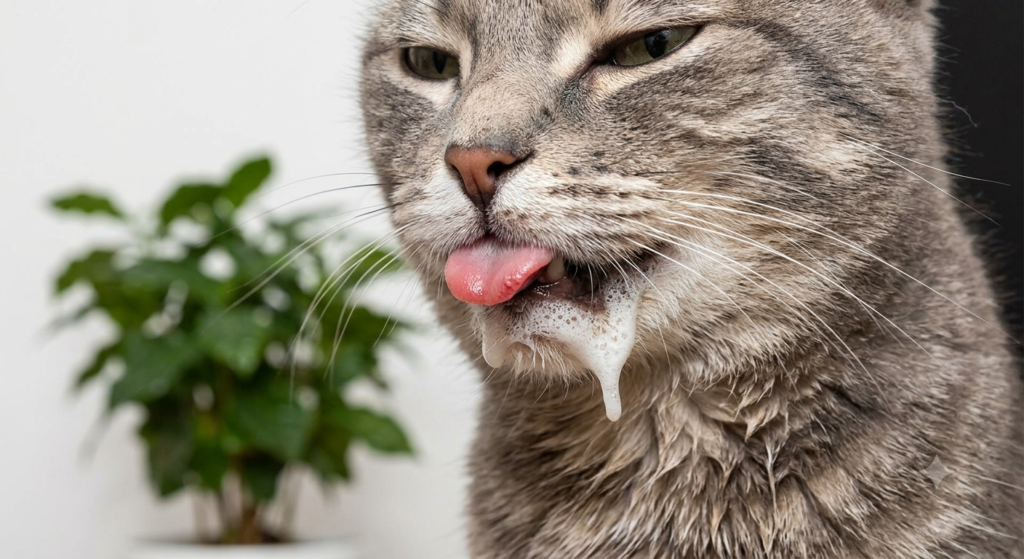
- Hypersalivation (Drooling): Your cat’s body will immediately begin producing excessive saliva in an attempt to wash the irritating crystals away. This leads to heavy, often frothy or stringy drooling.
- Swelling of the Mouth, Tongue, and Lips: The embedded crystals cause significant inflammation. Within a short time, you may observe pothos plant swelling mouth cats. The tongue can swell so much it might protrude from the mouth, making closing the jaw difficult. This swelling can make it visually obvious that the cat has been exposed to an irritant.
Serious and Escalating Signs of Pothos Poisoning
If the immediate oral pain doesn’t cause the cat to stop chewing and the cat swallows some of the plant material (even small amounts), the crystals will move further down the digestive tract. This leads to more serious and widespread symptoms. While the mechanical damage is localized, the body’s reaction can create cascading health issues.
Keep a vigilant eye out for these secondary, serious symptoms:
- Difficulty Swallowing (Dysphagia): As the swelling spreads from the mouth to the throat and esophagus, it becomes extremely painful and mechanically difficult for your cat to swallow saliva, let alone food or water. This pothos plant difficulty swallowing cats is a major concern.
- Vomiting and Diarrhea: The calcium oxalate crystals will irritate the lining of the stomach and intestines. This usually triggers acute vomiting. Diarrhea may follow as the digestive system tries to expel the irritant rapidly.
- Loss of Appetite (Anorexia): A cat whose mouth and throat are swollen and in agonizing pain will absolutely refuse to eat. Even their favorite treats won’t tempt them. Prolonged pothos plant loss of appetite cats can be dangerous for cats, leading to a condition called hepatic lipidosis (fatty liver disease) within just a few days of not eating.
- Lethargy and Depression: Due to the pain, stress, dehydration from vomiting/drooling, and lack of energy, your cat will become extremely quiet. A generally energetic cat may withdraw, sleep excessively, and become unresponsive to interaction. This pothos plant lethargy cats is a strong sign their body is struggling.
- Tremors and Lack of Coordination: In severe cases, where a significant amount of plant material is ingested or the cat has a heightened sensitivity, neurological symptoms may appear. You might see pothos plant tremors cats, shaking, or general weakness. This is a critical sign requiring immediate veterinary intervention.
What to Do If Your Cat Eats Pothos: Immediate Action Plan
If you suspect or know your cat has eaten pothos, remaining calm is your priority. Your cat will mirror your panic, which can worsen their distress and elevate their heart rate. Follow this step-by-step action plan:
1. Separate the Cat and the Plant
Immediately remove the cat from the area and place the chewed plant where it can no longer be reached. This prevents further ingestion while you manage the situation.
2. Assess the Damage and the Cat
Look at the plant to estimate how much was eaten. Check the cat’s mouth gently. Look for the physical signs of pawing, swelling, and drooling we discussed earlier.
3. Contact Your Veterinarian Immediately
This is the most critical step. Do not wait to see if symptoms worsen. Call your regular veterinarian or, if it’s after hours, the nearest emergency veterinary clinic. Inform them that your cat has ingested pothos and report the symptoms you are seeing. They will guide you on whether you need to bring the cat in immediately.
4. Rinse the Mouth (If Safe)
If your cat is cooperative (and ONLY if they are not in excessive distress or aggression), you can try to gently rinse their mouth with cool, clear water. This might help wash away some of the surface-level plant matter and crystals that haven’t embedded. Use a gentle stream from a faucet or a wet cloth. Do not force this, as it can cause further injury and stress to both you and your cat.
5. Offer Fluids (But No Food)
Once you’ve spoken with a vet, you can offer your cat fresh water. Some vets might recommend offering a small amount of something that can coat the stomach, like the water from a can of tuna (in water, not oil, and no sodium), but only under their specific instruction. Do not offer food, as the act of chewing and swallowing can cause further pain and damage.
6. Monitor Closely
If your vet advises monitoring the cat at home, observe them constantly. Watch for the progression of any serious symptoms, especially tremors, persistent vomiting, or difficulty breathing (which can occur if throat swelling is severe). If any of these develop, go to the emergency vet immediately.
Veterinary Treatment for Pothos Poisoning
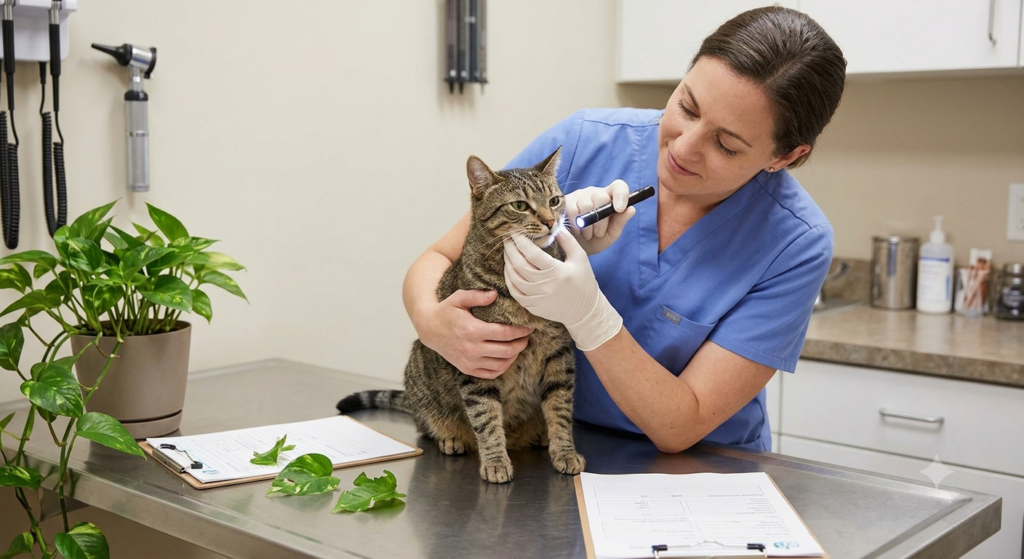
If your cat’s symptoms are moderate to severe, your vet will begin treatment immediately. The focus is not on an “antidote” (as there isn’t one for mechanical crystal injury), but on supportive care to manage the pain and prevent complications.
Typical veterinary treatments include:
1. Pain Management
This is the primary goal. The vet will administer potent, pet-safe pain relievers, often via injection, to provide immediate relief from the intense oral and gastrointestinal pain.
2. Fluids and Dehydration Support
The heavy drooling and vomiting can cause rapid dehydration. Intravenous (IV) fluids are often administered to restore hydration, balance electrolytes, and support organ function, particularly the kidneys.
3. Gastrointestinal Support
Medications to stop vomiting (anti-emetics) and protect the stomach lining (gastroprotectants) are crucial. These drugs help the digestive system heal from the crystal-induced trauma.
4. Airway Support (If Needed)
In rare cases where swelling of the throat is so severe that it obstructs the airway, the vet may need to provide oxygen therapy or, in extreme emergencies, place a breathing tube to ensure the cat can breathe.
5. Nutrition
If the cat refuses to eat for an extended period due to oral pain, the vet may discuss nutritional support, which might involve a temporary feeding tube to ensure the cat receives necessary nutrients and prevents fatty liver disease.
Cat-Safe Plant Alternatives to Pothos
Knowing what happens when a cat eats a pothos, you might decide it’s best to remove it from your home entirely. The good news is you can still have a stunning indoor garden that is 100% safe for your feline companions.
Here is a list of best cat-safe houseplants that are non-toxic, pet-friendly, and often quite easy to care for, making them perfect alternatives to pothos.
Best Pet-Friendly Indoor Plants
These plants have been officially deemed non-toxic by organizations like the ASPCA:
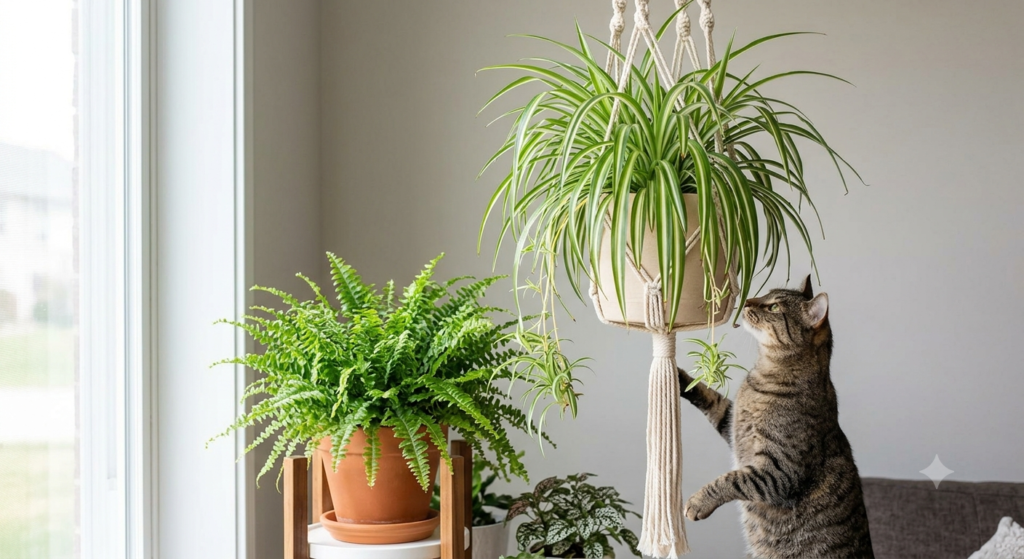
- Spider Plant (Chlorophytum comosum): Perhaps the ultimate “starter” pet plant. They tolerate a wide range of light, don’t mind being a bit dry, and produce “pups” you can easily propagate. Best low-light plants safe for cats list often includes the spider plant.
- Boston Fern (Nephrolepis exaltata): If you love lush greenery, a Boston Fern is a great choice. They are non-toxic and add a classic touch. They prefer higher humidity, so they are great for bathrooms with a window.
- Polka Dot Plant (Hypoestes phyllostachya): For a splash of color (pink, red, or white), this plant is a charming and safe addition.
- Swedish Ivy (Plectranthus verticillatus): While not related to true ivy (which is toxic), this cascading plant has beautiful, scalloped leaves and is safe for pets.
Best Alternatives to Pothos for Cat Owners
For those who want a similar look or function to the trailing pothos, these are the best cat-friendly hanging plants:
- Wax Plant (Hoya carnosa): Hoyas are famous for their stunning, waxy flowers and thick, succulent-like trailing vines. They have a similar growth habit to pothos but are completely safe for both cats and dogs.
- Burro’s Tail (Sedum morganianum): A beautiful succulent with cascading, “tail-like” stems. It requires bright light but is a striking, pet-safe trailing plant.
Best Air-Purifying Plants Safe for Cats
If your goal was air purification (a common reason for choosing pothos), try these best air-purifying plants safe for cats:
- Areca Palm (Dypsis lutescens): A beautiful, majestic palm that is a powerhouse air purifiers and is listed by NASA as one of the best.
- Bamboo Palm (Chamaedorea seifrizii): Another fantastic, non-toxic air-filtering palm that handles lower light well.
How to Cat-Proof Your Pothos (If You Must Keep It)
If you are deeply attached to your pothos and want to keep it, you must ensure it is permanently and safely out of your cat’s reach. A determined cat can be a formidable obstacle, so your cat-proofing must be bulletproof.
Here are the most effective strategies:
- Hanging Planters: This is often the best solution. Use a strong hook and a secure macrame or metal hanger to place the plant near a ceiling or high wall. Ensure the trails are trimmed so they are always at least several feet above any furniture, shelves, or windowsills your cat can jump onto. Best cat-friendly hanging plants are great, but even those must be high enough.
- High Shelves (with a catch): Placing a plant on a tall bookshelf can work, but you must make the rest of the shelf space inaccessible. A cat only needs a few inches of ledge to land on. Ensure the shelf is completely full of other heavy objects (like books or dense decor) so there is no landing platform near the plant.
- Inaccessible Rooms: This is the safest option. Move all pothos plants into a room that your cat is never allowed to enter, such as a home office, a guest bedroom, or a closed-off sunroom. This eliminates the risk entirely.
- Trim Regularly: Keep your pothos trimmed. Even a hanging planter is a hazard if a long trail grows to the point where a cat can stand on a couch and bat at the leaves. Regular pruning prevents accidental encounters.
- Physical Barriers (Last Resort): While not aesthetically pleasing, a wire birdcage over a small plant or a small greenhouse cabinet can act as a physical barrier.
Can My Cat Eat Just a Little Bit of Pothos?
This is a very common question, and the answer is no.
There is no “safe” amount of pothos for a cat. While a single tiny nibble might only cause localized oral irritation, even that is agonizing. The problem is that once a cat is interested, you cannot predict if they will stop. What starts as a small bite can quickly become a mouthful before the pain signal fully registers.
Furthermore, cats can have widely different sensitivities to the calcium oxalate crystals. A small ingestion for one cat could be a medical emergency for another. It is always best to assume any exposure is dangerous and take immediate action. The risk of waiting can lead to severe swelling that compromises breathing, persistent vomiting leading to dehydration, and other critical health issues.
Your cat’s safety is far more important than any houseplant. By removing the hazard or making it completely inaccessible, you prevent a potentially heartbreaking (and expensive) emergency.
What Happens If Cat Eats Pothos Plant? Key Takeaways
Ingesting any part of a pothos plant is not just an unpleasant experience; it’s a genuine medical concern for your cat. The primary takeaway is this:
- It’s Not Just “Bad”; It’s Mechanically Toxic: The damage is caused by microscopic, razor-sharp crystals embedding themselves in tissue.
- Symptoms Start Fast: Watch for immediate pawing, drooling, and obvious oral pain.
- Act Quickly: If you suspect ingestion, call your vet now. Do not wait for symptoms to worsen.
- Treatment Is Supportive: Vets will focus on pain relief, hydration, and managing inflammation.
- Prevention is Everything: The best way to manage this risk is to either remove the pothos plant or ensure it is permanently and reliably inaccessible to your cat. There are many beautiful, safe alternatives available.
By staying informed and acting decisively, you can ensure your home remains a safe and happy environment for your beloved furry companion.