
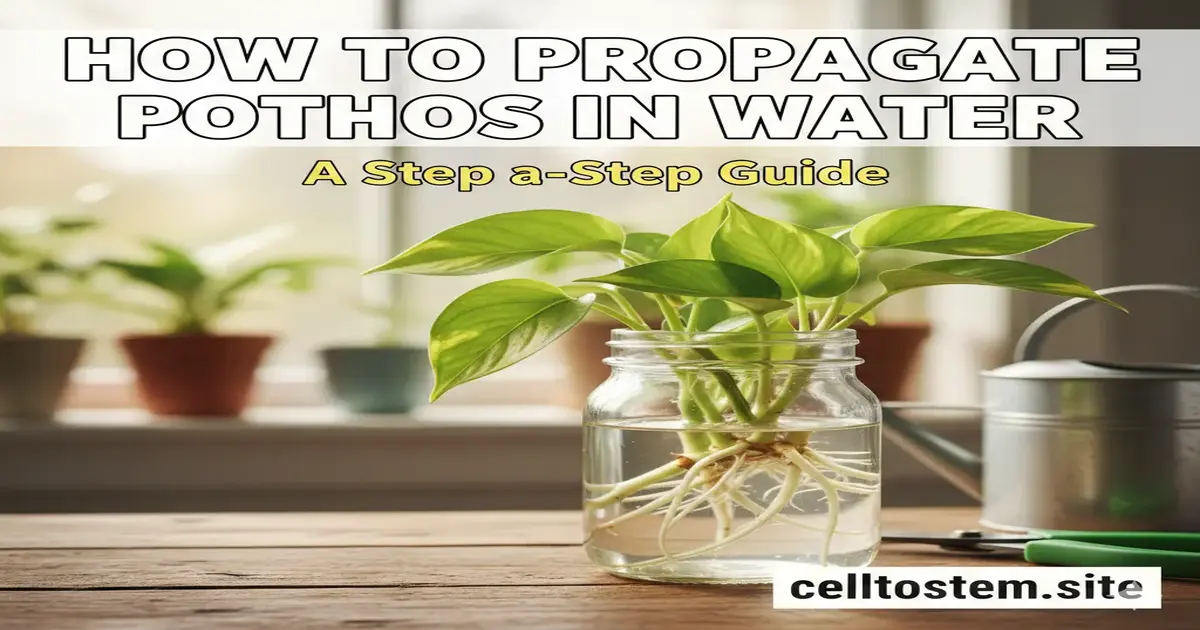
Multiplying your indoor jungle is one of the most rewarding skills a gardener can develop. Not only does it save money, but it also allows you to share your favorite species with friends and reduce your environmental footprint by avoiding plastic nursery pots. For many beginners, learning how to propagate pothos plant in water is the perfect entry point. This method, often called pothos plant water rooting technique, offers a front-row seat to the fascinating biological process of root development.
Propagation is the process of creating new plants from a variety of sources: seeds, cuttings, or other plant parts. In an apartment setting, where space and light may be limited, focusing on vegetative propagation—using stems, leaves, or roots—is the most efficient way to expand your collection. By understanding the science of “nodes” and “auxins” (natural growth hormones), you can turn a single leggy vine into a lush, multi-plant display.
Understanding the Science of Plant Propagation
To propagate successfully, you must understand where growth happens. Most houseplants possess “meristematic tissue,” which contains undifferentiated cells capable of becoming roots or shoots.
The Importance of the Node
The node is the “brain” of the plant cutting. It is the slightly swollen point on a stem where a leaf, a bud, or an aerial root attaches. When you take a cutting, the node is where the new roots will emerge. Without a node, most cuttings (especially vining plants) will simply sit in water until they eventually rot.
Realistic Apartment Example: The Leggy Monstera
Imagine you have a Monstera deliciosa taking over your small living room corner. Instead of pruning it and throwing the leaves away, you can identify a node with an existing aerial root. By cutting just below that node, you have an instant “starter plant” ready for a new container.
How to Propagate Pothos Plant in Water: A Beginner’s Guide
The epipremnum aureum propagation in water (the scientific name for Pothos) is widely considered the gold standard for beginners because the plant is incredibly resilient. This pothos vine cutting propagation method allows you to monitor root health through clear glass.
Step-by-Step Pothos Plant Water Rooting Technique
- Identify a Healthy Vine: Choose a vine with at least 4–5 leaves. Ensure the parent plant is hydrated and free of pests.
- Locate the Nodes: Look for the small brown bumps on the stem opposite the leaves.
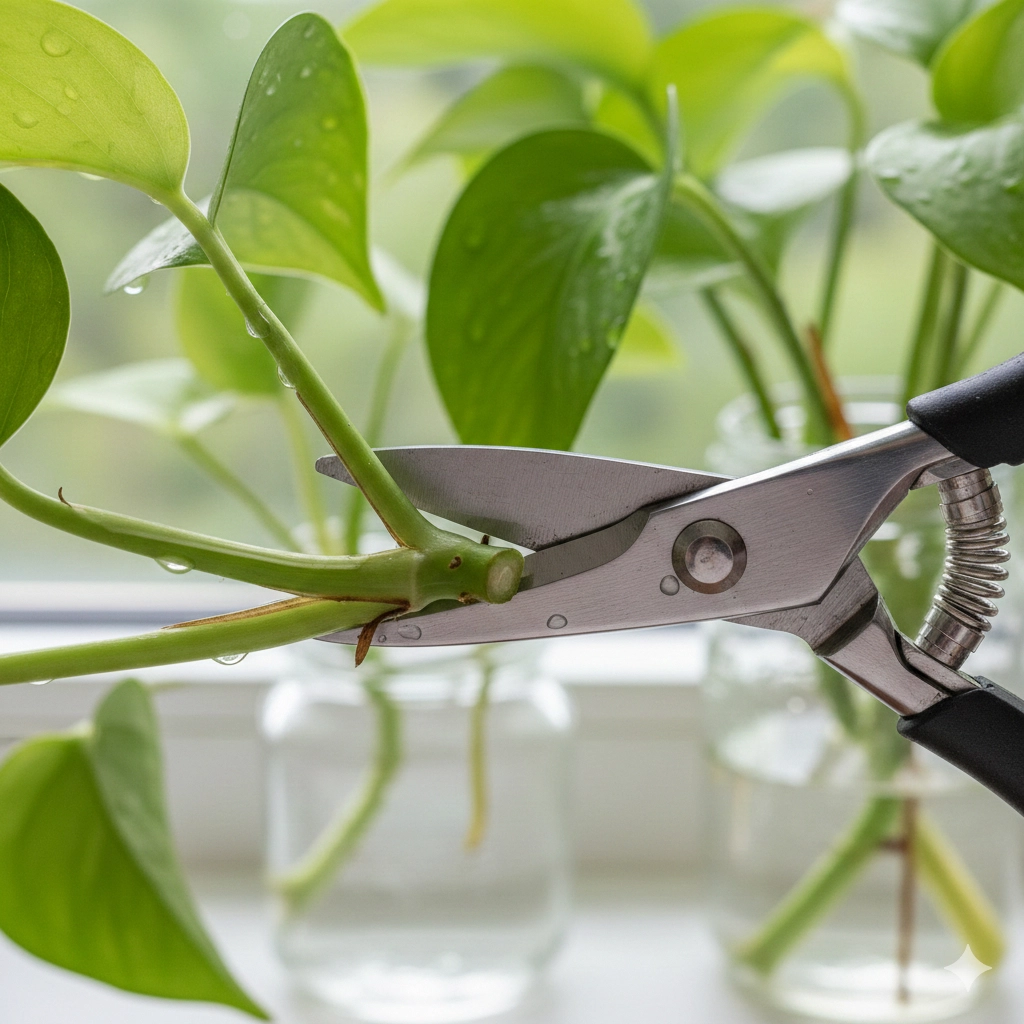
- Make the Cut: Using sterilized shears, cut about 1/4 inch below a node at a 45-degree angle. This optimal cutting angle increases the surface area for water absorption.
- Remove Lower Leaves: Strip the leaves closest to the cut end so that no foliage is submerged. Submerged leaves will decay and introduce bacteria.
- Placement: Place the stem in a vessel of clean water, ensuring at least one or two nodes are submerged.
Best Conditions for Pothos Water Propagation
For hydroponic pothos propagation, the best lighting conditions for pothos water propagation involve bright, indirect sunlight. Avoid direct rays, which can overheat the water and grow algae. Regarding the best water type for propagating pothos, filtered water or tap water left out overnight (to allow chlorine to dissipate) is ideal for sensitive cultivars.
Advanced Techniques: Soil Propagation and Division
While the devil’s ivy water propagation method is visual and fun, some plants, like succulents or Snake Plants, often perform better when propagated directly in soil or through division.
Stem Cuttings in Soil
This method involves placing a cutting directly into a moist, soil-less potting mix (like a blend of peat and perlite). This is the best method for propagating large pothos in water-averse species like Geraniums or Fiddle Leaf Figs.
- Cause and Effect: Soil propagation encourages the development of “soil roots” immediately. These are structurally different from “water roots,” which are often more brittle. By starting in soil, the plant avoids the “transplant shock” that sometimes occurs when moving a plant from water to dirt.
Root Division
For clumping plants like Peace Lilies or Sansevieria, propagation is done by physically separating the root ball into two or more sections.
- Pro Tip: Use a sterilized knife to slice through the rhizome, ensuring each section has a healthy set of leaves and a robust root system.
Essential Tools and Supplies for Success
You don’t need a professional greenhouse to be successful, but having the best tools for pothos water propagation and other methods makes the process cleaner and more effective.
| Tool | Purpose | Expert Recommendation |
| Bypass Pruners | Making clean, sharp cuts without crushing the stem. | Sterilize with 70% isopropyl alcohol between plants. |
| Glass Vessels | For pothos plant cloning in water. | Use clear glass to monitor aerial root development in pothos water propagation. |
| Rooting Hormone | Speeds up root initiation. | Generally not needed for Pothos, but the best rooting hormone for pothos water propagation (synthetic auxin) helps woody stems. |
| Mister | Maintains humidity for soil cuttings. | Use a fine mist to avoid soaking the soil surface. |
Identifying the Best Plants to Propagate
Not all plants are created equal when it comes to “DIY cloning.” Based on principles from university extension services, such as the University of Florida’s IFAS, plants with high concentrations of natural auxins are the easiest to root.
The Best Pothos Varieties for Water Propagation
While all Epipremnum species root well, the best way to propagate pothos in water for beginners is by using the Golden Pothos or Marble Queen. These varieties are vigorous growers. For more advanced collectors, the Satin Pothos (Scindapsus pictus) offers a beautiful challenge, though it may take longer to see how to grow pothos roots in water.
Other Easy Winners
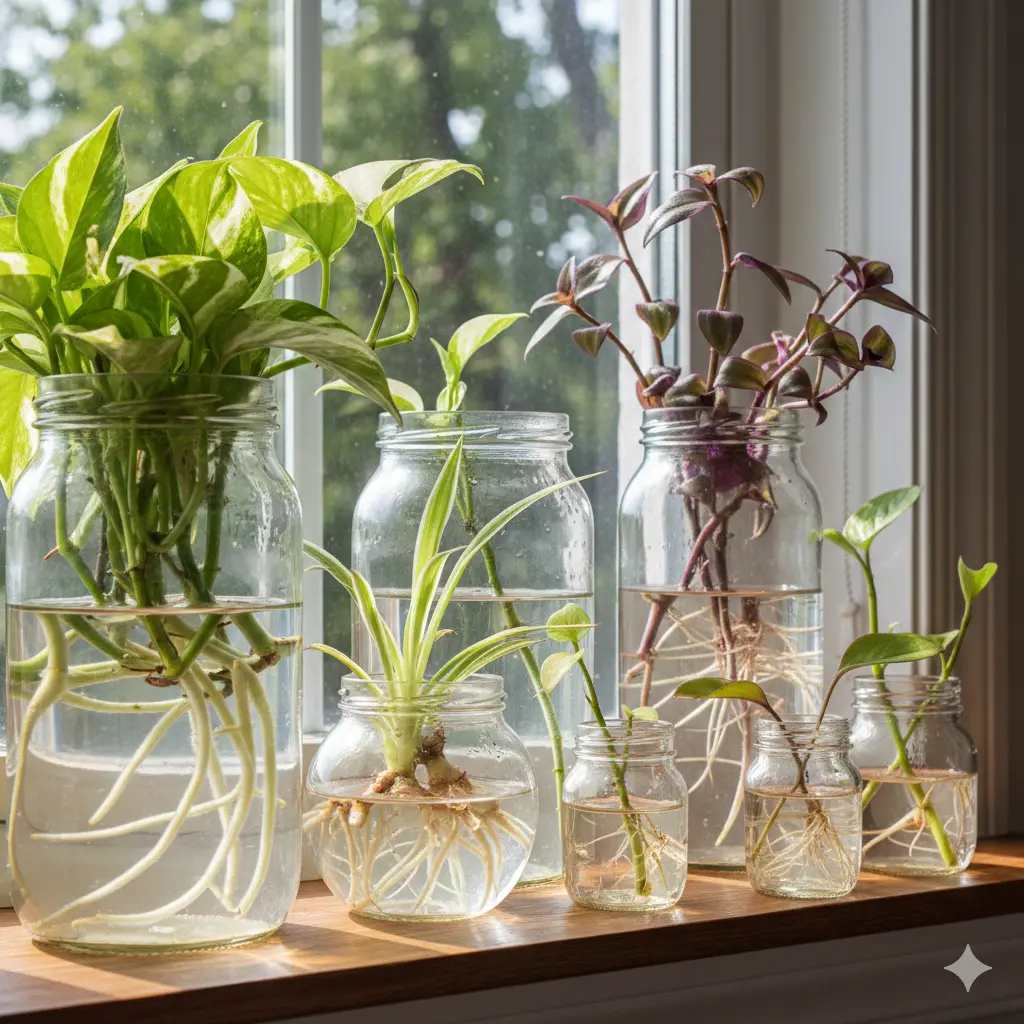
- Spider Plants: These produce “pups” or spiderettes that already have nubby roots.
- Tradscantia (Inch Plant): Known for incredibly fast pothos stem propagation in aquatic environment-style rooting, often showing growth in just 3-4 days.
Common Mistakes and Troubleshooting
Even with the best pothos propagation using water as medium, things can go wrong. Here is how to diagnose and fix common issues.
Stem Rot
If the bottom of your cutting turns black and mushy, it’s rotting. This is usually caused by dirty water or a dull blade that crushed the stem cells.
- Solution: Cut above the rot, clean your vessel, and use fresh, filtered water.
No Root Growth
If weeks pass and you see no aerial root development in pothos water propagation, the temperature may be too low.
- Solution: Roots grow fastest in warm environments (21°C–25°C). Move your cutting to a warmer spot, away from AC vents.
Algae Growth
Green film on the glass or roots competes for oxygen.
- Solution: Clean the container every 5–7 days. For a more permanent fix, use an opaque container, which is the best container for pothos water propagation if you struggle with algae, as it blocks light from the water.
Aftercare: Transitioning to Soil
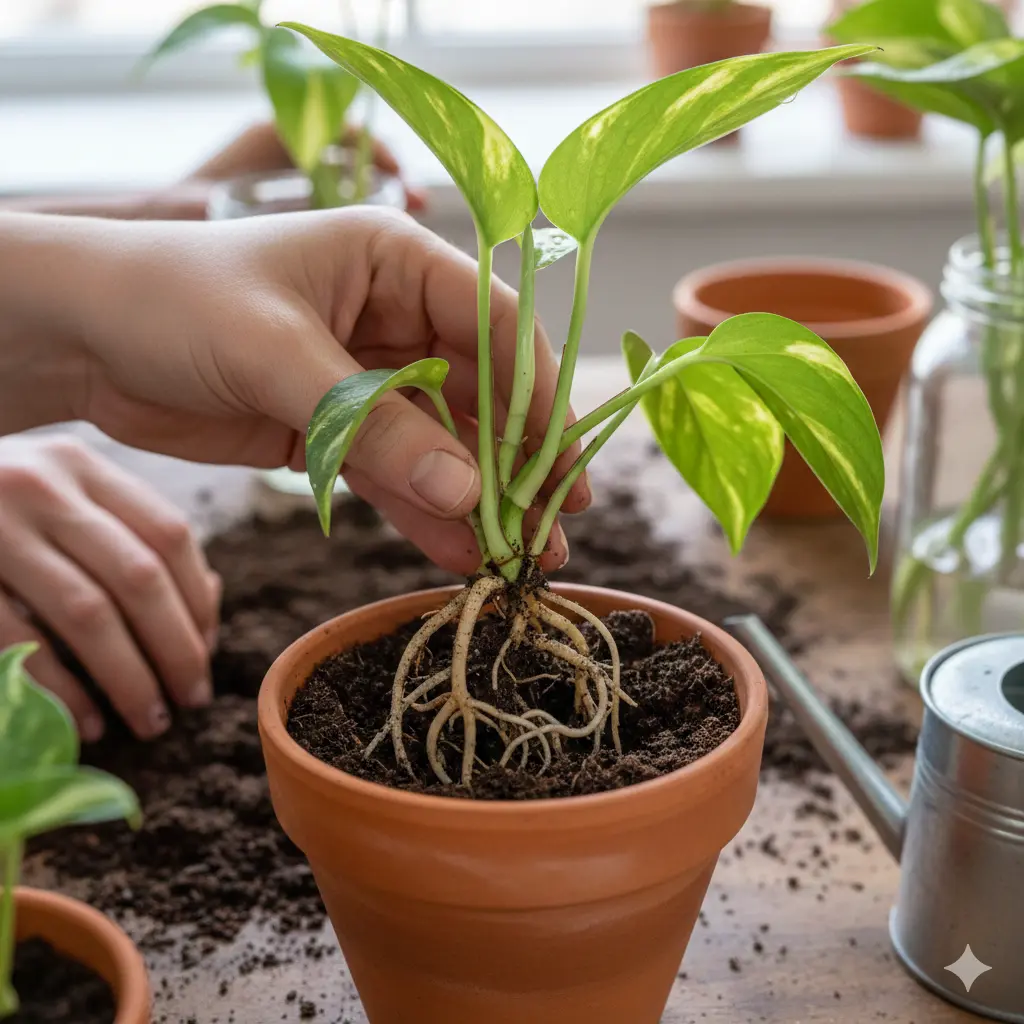
The most critical moment in pothos vine cutting propagation is moving the plant from water to its permanent home. How to grow pothos roots in water is only half the battle; the plant must eventually adapt to soil.
When to Pot Your Cuttings
Wait until the roots are at least 2–4 inches long. According to the Royal Horticultural Society (RHS), waiting too long can make the roots “lazy,” as they become overly adapted to an aquatic environment and struggle to pull nutrients from dense soil.
The Best Fertilizer for Pothos After Water Propagation
Do not fertilize immediately after potting. The new roots are sensitive. Wait about 4–6 weeks for the plant to establish itself in the soil. Then, use a balanced, water-soluble fertilizer diluted to half-strength.
Humidity Requirements
New propagations have small root systems and can’t absorb much water. To prevent wilting, increase the local humidity by placing a clear plastic bag over the pot for the first week, creating a “mini-greenhouse.”
Summary of Key Takeaways
- Node Power: Always ensure your cutting has at least one node; this is where the roots live!
- Cleanliness: Sterilize tools and change water weekly to prevent bacterial rot.
- Light Balance: Bright, indirect light is the best lighting conditions for pothos water propagation.
- Timing: The best time to propagate pothos in water is during the active growing season (Spring and Summer).
- Patience: While some plants root in days, others may take a month. Don’t give up unless the stem turns mushy.
Propagation is a journey of patience and observation. By mastering the pothos plant water rooting technique, you gain a foundational understanding of plant biology that applies to almost every species in your indoor garden.
“While aquatic rooting is highly visual and easy for beginners, it is helpful to look at the masterpothos plant propagation guideto see how this method compares against direct soil propagation options.”
Thank You For Visiting Our Website https://celltostem.site/. We Value Your Feeback!