
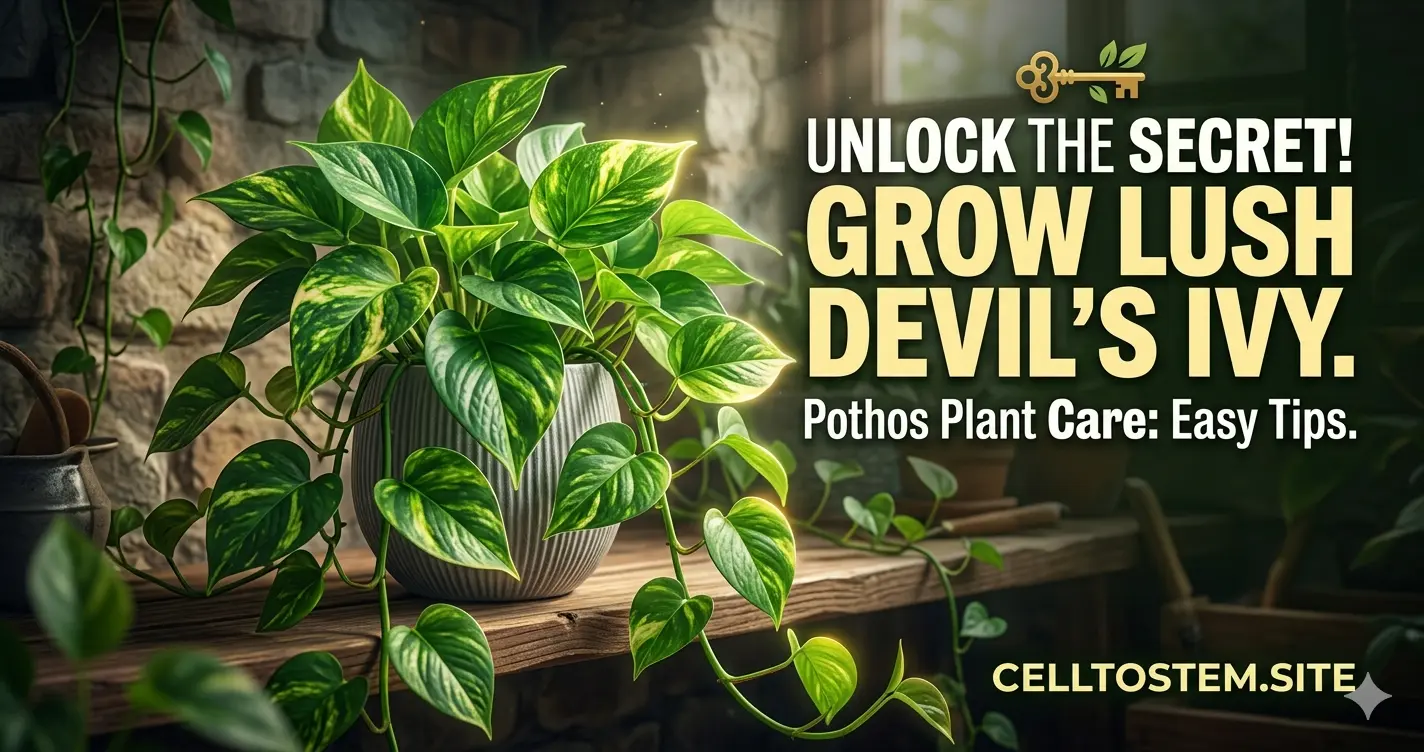
Pothos plants, often called Devil’s Ivy, are the ultimate choice for anyone wanting a touch of green without the stress. Whether you are a seasoned gardener or just starting, these vines are incredibly forgiving. They grow fast, look beautiful trailing from shelves, and can handle a bit of neglect.
In this guide, we will dive deep into everything you need to know about Epipremnum aureum care so your plant stays vibrant and healthy for years.
1. Finding the Perfect Light for Your Pothos
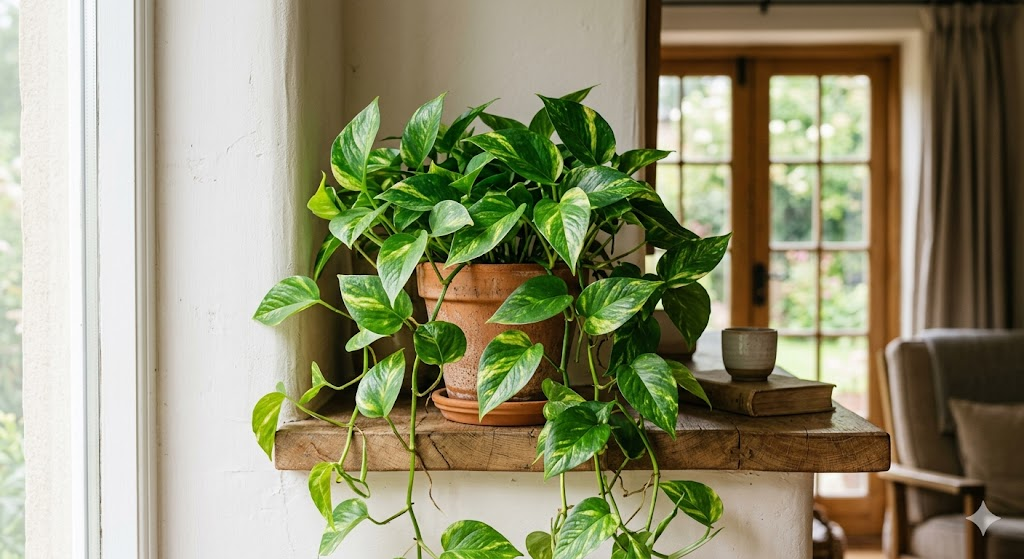
While pothos is famous for being tough, light plays a huge role in how fast it grows and how bright its leaves stay. Most varieties love bright, indirect sunlight. If you put them in a spot with too much direct sun, the leaves might scorch or turn yellow.
If you have a dim corner, the best pothos plant for low light is usually the classic Golden Pothos care variety. It holds its color well even when the sun isn’t shining directly on it. On the other hand, if you have a Marble Queen pothos care routine, you’ll want more light to keep those beautiful white splashes from turning solid green.
2. Master the Art of Watering
One of the biggest mistakes people make is overwatering. Pothos plants prefer their soil to dry out a bit between drinks. A good rule of thumb is to wait until the top two inches of soil feel dry to the touch.
Pothos Plant Watering Tips:
- The Droop Test: If the leaves look a little wilted or limp, your plant is thirsty. It usually perks back up within hours of watering.
- Drainage is Key: Always use a pot with holes. Pothos hate “wet feet,” which can lead to root rot.
- Yellow Leaves: If you see yellowing across the whole plant, you might be watering too often.
For those keeping a neon pothos care schedule, consistent watering helps maintain that “electric” lime-green glow.
3. Best Pothos Varieties for Every Room
Pothos are incredibly versatile. Because they are so hardy, they are widely considered the best pothos plant for beginners. But where should you put them?
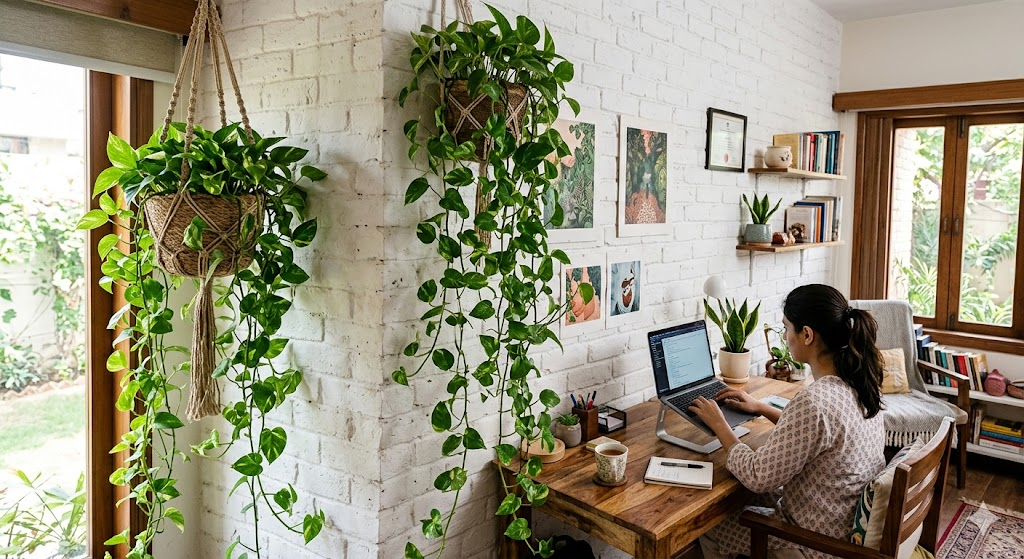
- Best pothos plant for hanging baskets: The Jade Pothos or Silver Satin look incredible when their vines are allowed to trail down three or four feet.
- Best pothos plant for office desk: A small N’Joy Pothos stays compact and handles fluorescent office lights like a champ.
- Best pothos plant for bathroom: Since they love humidity, almost any pothos will thrive here. The Golden Pothos is a classic choice for high-moisture areas.
4. Troubleshooting Pothos Plant Leaf Problems
Even the easiest plants run into trouble. If you notice pothos plant leaf problems, don’t panic. Most are easy to fix.
- Brown Tips: This usually means the air is too dry. Try misting the leaves or using a humidifier.
- Small Leaves: If the new leaves are tiny, the plant might need more light or a little bit of organic fertilizer.
- Loss of Variegation: If your Marble Queen is turning solid green, it’s “reverting” because it needs more light to produce those white patterns.
The pothos plant growth rate is naturally fast, so if you notice it has stopped growing entirely during the spring or summer, it might be time to check if it’s root-bound and needs a bigger pot.
5. Propagation: How to Get Free Plants
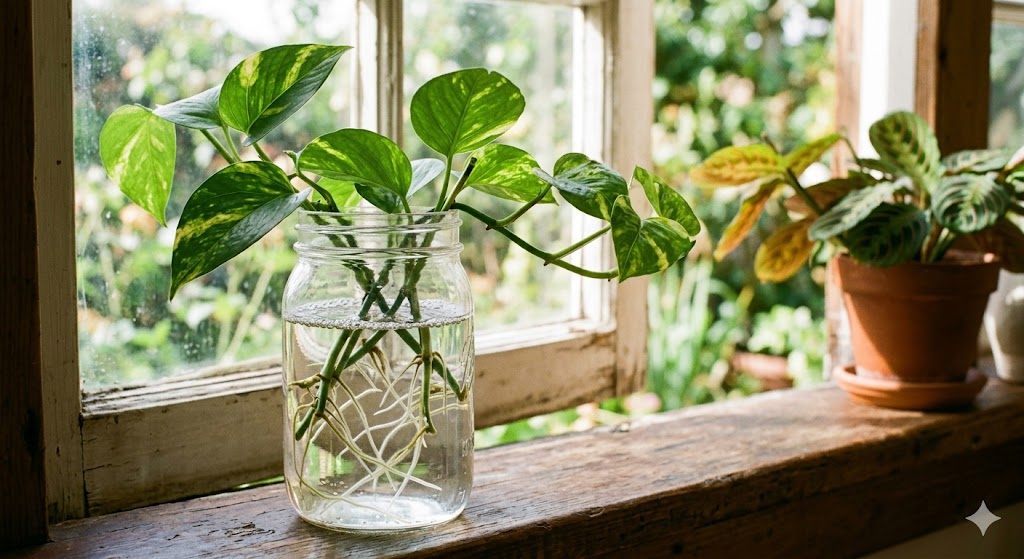
One of the most exciting pothos plant care tips and tricks is learning how to make new plants from your existing ones. Pothos are perhaps the easiest plants to propagate in water.
The best pothos plant for propagation is any healthy vine with “nodes” (the little brown bumps where leaves meet the stem). Simply snip a vine below a node, place it in a jar of clean water, and wait. In a few weeks, you’ll see white roots growing.
6. Unique Ways to Grow Pothos
Beyond the standard ceramic pot, you can get creative with how you display your vines.
- Best pothos plant for terrarium: Use smaller-leaf varieties like the Cebu Blue or Pothos N’Joy to add texture to a closed glass environment.
- Best pothos plant for aquarium: Did you know pothos can grow with just their roots in water? Many fish keepers use them as the best pothos plant for aquarium filters because the roots help clean the water by absorbing nitrates.
Summary Checklist for Success
To keep your Devil’s Ivy happy, remember these quick points:
- Light: Bright, indirect is best, but low light is okay for most.
- Water: Let the soil dry out halfway before watering again.
- Temperature: Keep them between 60°F and 85°F.
- Feeding: Use a balanced liquid fertilizer once a month during spring and summer.
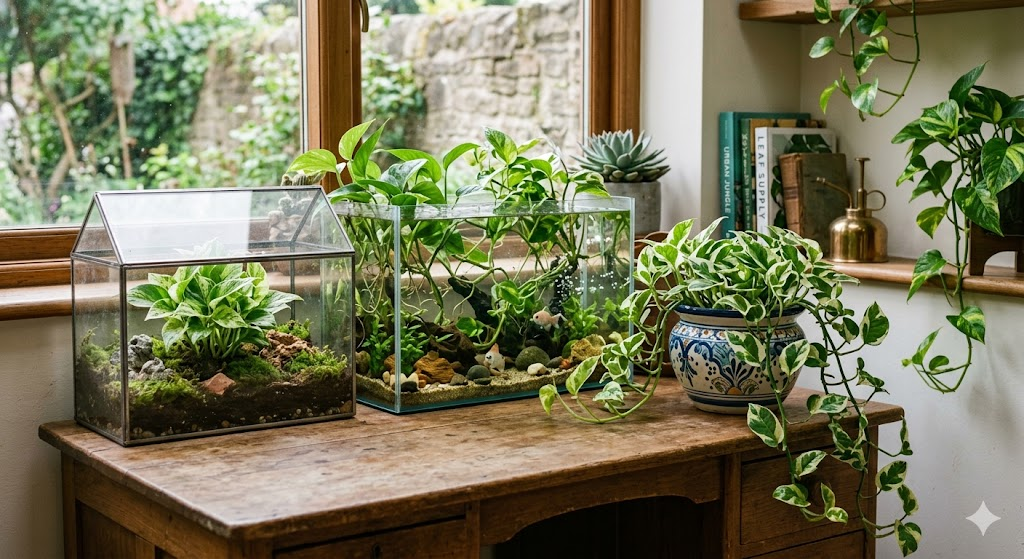
By following these simple steps, you can turn a single pothos into a lush, jungle-like display in your home. They are truly the gift that keeps on giving!
Once you have mastered the foundational rules of light and hydration, you can push your vines to their limits. If you want massive cascading leaves, implement our advanced adjustments to make pothos grow faster indoors.
Thank You For Visiting Our Website celltostem