
Quick Summary Guide
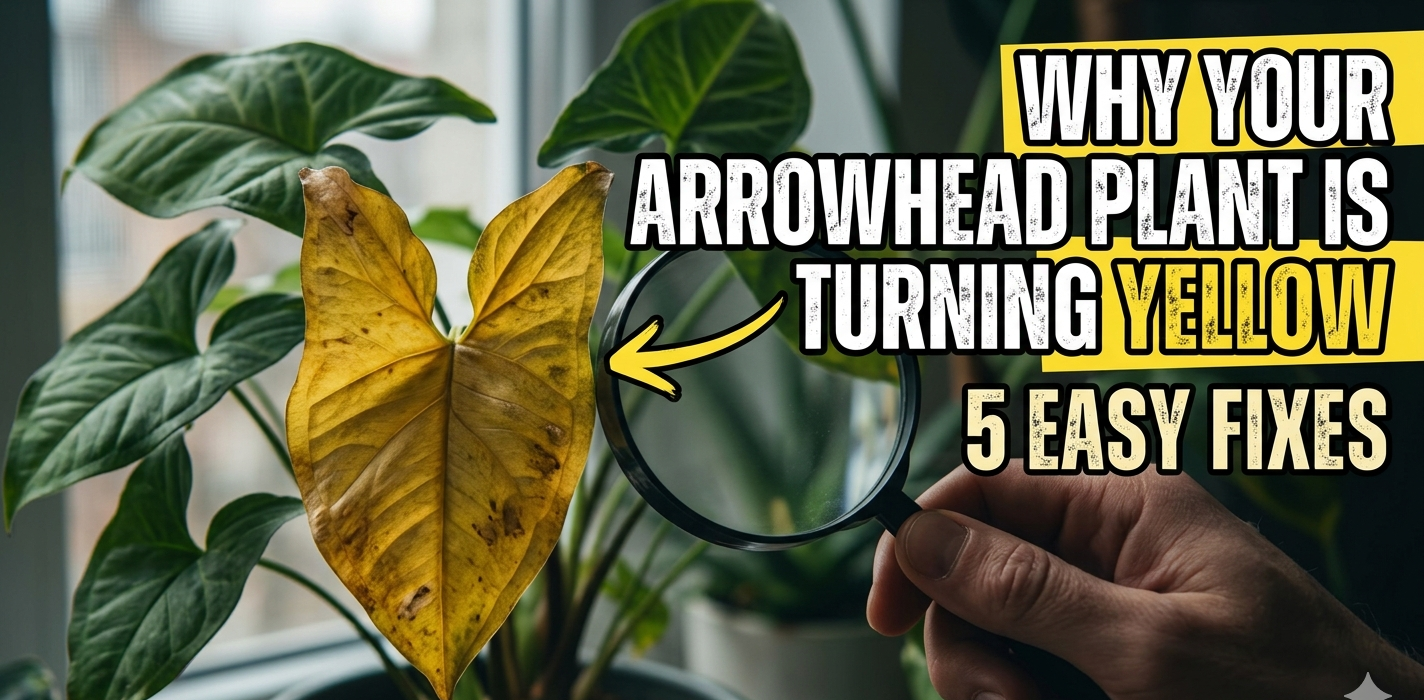
If your arrowhead plant is developing yellow leaves, improper watering is the number one cause. Soil that stays wet for too long cuts off oxygen to the roots, causing them to rot. On the flip side, letting the soil dry out completely until the plant wilts will also turn the leaves yellow and dry. Other common culprits include low humidity, hidden pest infestations, and lacking the right nutrient balance in the soil. To fix it, check the moisture of your soil right away, cut back on water if it is soggy, and make sure your plant gets plenty of bright, indirect sunlight.
Why Your Arrowhead Plant Is Turning Yellow: 5 Easy Fixes
Few indoor plants bring as much vibrant energy to a room as the arrowhead plant (Syngonium podophyllum). With its distinct, spade-shaped leaves and lush trailing growth, it is a true favorite for plant parents. But it can be incredibly frustrating when those beautiful green leaves start changing color. If you are noticing your arrowhead plant leaf discoloration, you are not alone.
Discovering Syngonium podophyllum yellow leaves is a clear signal from your plant that something is wrong in its environment. In the plant world, this general yellowing is known as arrowhead plant chlorosis. It means your plant is losing its green chlorophyll because its vital systems are stressed.
To bring your foliage back to life, you need to understand the root causes behind arrowhead vine yellowing. Let us dive into the primary reasons your plant is struggling and look at the exact steps you can take to fix it today.
1. Drowning Roots and the Danger of Overwatering
By far, the most common reason for an arrowhead plant turning yellow is a breakdown in your arrowhead plant watering schedule. Arrowhead plants love consistent moisture, but there is a massive difference between damp soil and waterlogged soil.
When you water too frequently, or if your pot holds onto water, the air spaces in the soil fill up completely with liquid. Without oxygen, the roots cannot breathe. This leads directly to arrowhead plant root rot, a condition where the root system decays, turns mushy, and stops working. Ironically, because the damaged roots can no longer absorb water or food, the top of the plant starves and the leaves turn a pale, sickly yellow.
[Frequent Watering] ➔ [Oxygen Blocked in Soil] ➔ [Root Rot Develops] ➔ [Leaves Turn Yellow]
The Fix: Switch to a Proper Watering Routine
Stop watering on a strict calendar basis (like “every Tuesday”). Instead, trust your finger. Only water your plant when the top 1 to 2 inches of soil feel dry to the touch. When you do water, pour thoroughly until water runs out of the bottom drainage holes, then empty the saucer underneath so the roots never sit in stagnant water.
2. Using the Wrong Soil Mix and Pot Combo
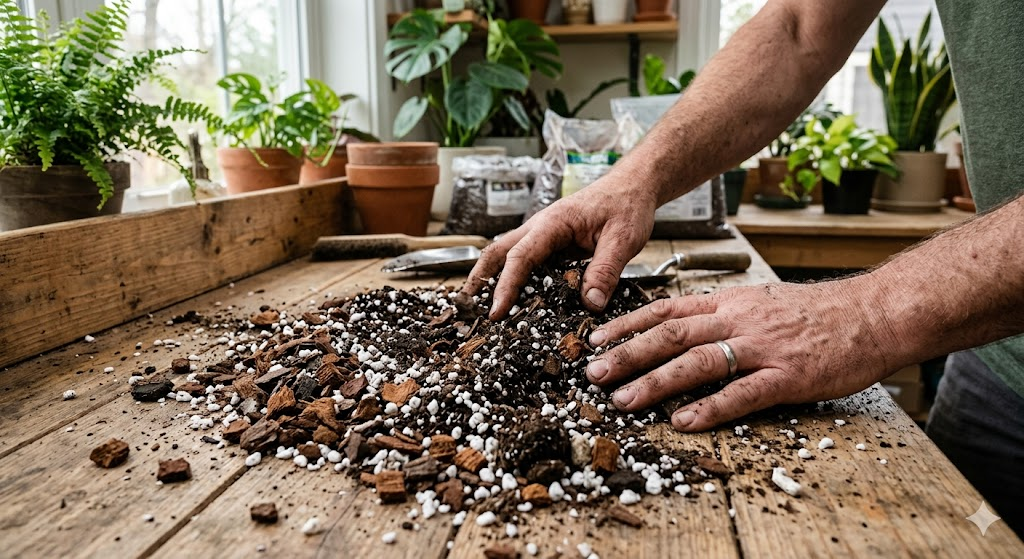
You can follow a perfect watering schedule, but if your plant is trapped in the wrong environment, you will still see yellowing leaves. Heavy, dense garden soils or old potting mixes pack down tightly over time. This trap retains too much water and causes severe root stress.
Choosing the best pot for arrowhead plant health means prioritizing drainage over aesthetics. A beautiful pot without a hole at the bottom is a death sentence for a tropical plant. Similarly, the best soil mix for arrowhead plant growth must mimic the loose, organic forest floor where these plants grow naturally.
| Component | Purpose in the Mix | Ideal Ratio |
| Standard Potting Soil | Provides structure and holds basic nutrients | 50% |
| Perlite or Pumice | Creates essential air pockets and speeds up drainage | 25% |
| Orchid Bark or Coco Coir | Mimics the natural tropical forest floor and prevents packing | 25% |
The Fix: Repot into an Airy Blend
If your current pot has no drainage, move your plant into a plastic or terracotta grow pot that has plenty of bottom holes. You can then slip this setup inside your favorite decorative container. Replant your Syngonium using the well-draining recipe outlined in the table above to keep oxygen flowing around the roots.
3. Poor Lighting Conditions
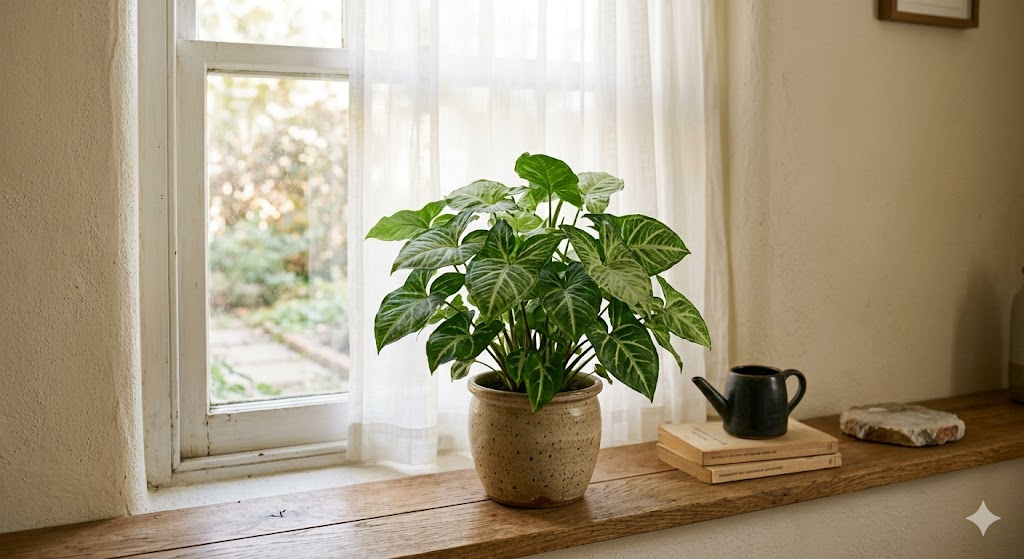
Light is food for your plant. Finding the best light for arrowhead plant varieties can be a bit of a balancing act because both extremes—too much light and too little light—will trigger a yellow color change.
- Too Little Light: When tucked into a dark corner, the plant cannot produce enough energy to support all its leaves. Growth slows down, stems become long and spindly, and the lower leaves turn yellow and drop off as the plant saves its remaining energy for new tips.
- Too Much Direct Sunlight: Arrowhead plants are native to the shaded floors of tropical rainforests. Intense, direct sunlight shining through a window will quickly scorch the delicate foliage. This creates bleached, pale yellow, or crisp brown patches across the leaves.
The Fix: Find the Bright, Indirect Sweet Spot
Move your arrowhead vine to a spot where it receives plenty of bright, filtered sunlight. A few feet away from an east-facing or west-facing window is usually perfect. If you notice the plant leaning aggressively toward the glass, give the pot a quarter-turn every week so all sides of the foliage receive equal energy.
4. Dry Air and Temperature Shock
Because these are native tropical plants, they thrive in warm, humid spaces. Dry indoor air is a hidden enemy that drains moisture out of the leaves faster than the root system can replace it.
When your indoor spaces lack moisture, you will first notice dry, brown tips on your plant. If the air stays dry, this issue progresses into full leaf yellowing and eventual shedding. Furthermore, sudden arrowhead plant temperature stress from cold window drafts in the winter, or blast zones from air conditioning vents, can shock the plant’s delicate tissues and cause rapid yellowing.
Growth Secret: Keeping your home between 65°F and 85°F (18°C to 29°C) and maintaining the best humidity level for arrowhead plant health—ideally 40% to 60%—will prevent environmental yellowing entirely.
The Fix: Boost Moisture and Protect from Drafts
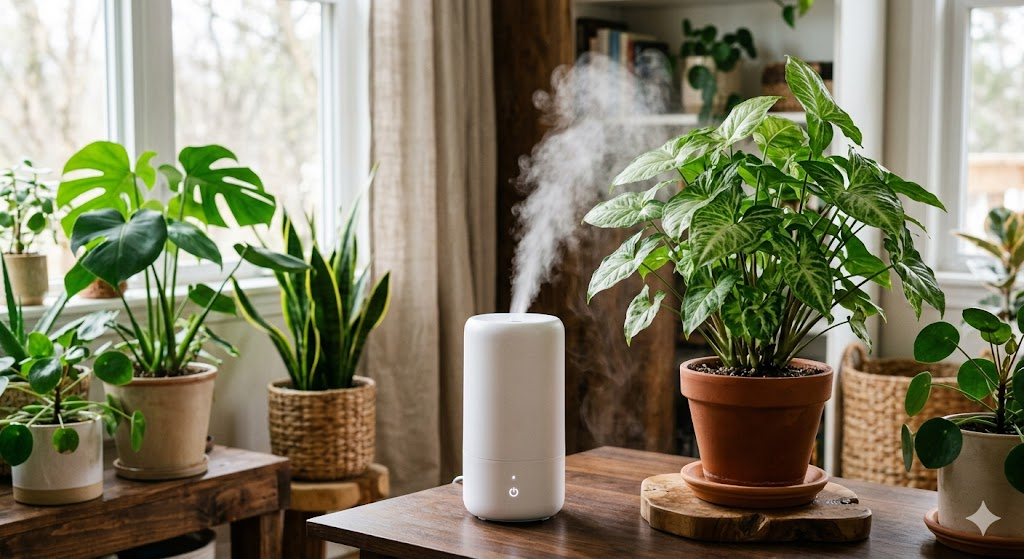
Keep your Syngonium far away from heating units, cold windows, and air conditioning vents. To raise the humidity around your plant naturally, group it closely with other indoor plants, place a small humidifier nearby, or set the pot on a shallow tray filled with pebbles and water. Just ensure the bottom of the pot rests on the stones and does not touch the water directly.
5. Nutrient Deficiencies and Starvation
If your plant has been living in the exact same soil for more than a year, it may simply be starving. As your arrowhead vine grows, it uses up the minerals and organic matter present in its potting mix.
An arrowhead plant nutrient deficiency usually shows up as a slow, uniform fading of the entire plant. The oldest leaves at the bottom of the stems will turn a pale yellow first because the plant is actively moving its remaining nitrogen and iron up to feed the new, emerging tips.
[Months in Same Soil] ➔ [Nutrients Fully Depleted] ➔ [Energy Sent to Top Growth] ➔ [Lower Leaves Fade to Yellow]
The Fix: Feed with a Quality Fertilizer
During the active spring and summer growing months, use the best fertilizer for arrowhead plant yellow leaves—a balanced, water-soluble liquid houseplant food mixed at half the recommended strength. Feed your plant once every four weeks to restock the soil with nutrients. Always make sure the soil is slightly damp before applying fertilizer to protect the sensitive roots from chemical burns. Skip feeding completely during the autumn and winter when the plant enters its natural resting phase.
6. Identifying Hidden Pest Attacks
When an arrowhead plant is stressed by poor watering or low light, it becomes highly vulnerable to tiny sap-sucking insects. Common indoor pests like spider mites, mealybugs, thrips, and scale use their piercing mouths to drain the moisture and vital fluids directly out of your plant’s leaves.
Pest damage often looks different from watering issues. Instead of a smooth, even yellowing across the leaf, a pest attack causes small, irregular yellow spots, speckles, or mottled patches on the surface. If left untreated, these small spots merge, causing the entire leaf to droop, wither, and die.
The Fix: Apply Safe Pest Control and Prune Damaged Growth
Inspect the undersides of the leaves and the tight areas where the stems meet regularly. Look for fine webbing (spider mites) or tiny, white cotton-like spots (mealybugs). Wash the foliage down with a gentle stream of room-temperature water to knock the bugs loose.
Next, treat the entire plant thoroughly with the best pest control for arrowhead plant protection, such as organic neem oil or an insecticidal soap spray. Finally, use the best pruning shears for arrowhead plant upkeep to clip away heavily damaged or completely yellowed leaves. Removing these dead sections stops the spread of pests and allows your plant to direct its energy toward pushing out fresh, healthy green growth.
Moving Forward: Your Recovery Checklist
To get your arrowhead plant back on track, approach the problem systematically:
- Step 1: Check the soil depth with your finger to verify if it is waterlogged or bone dry.
- Step 2: Ensure the pot has open drainage holes and uses an airy, porous soil blend.
- Step 3: Relocate the plant to a spot with plenty of bright, indirect sunlight.
- Step 4: Raise the local humidity and protect the stems from sudden cold air drafts.
- Step 5: Trim away completely yellowed leaves to keep the remaining plant clean and healthy.