
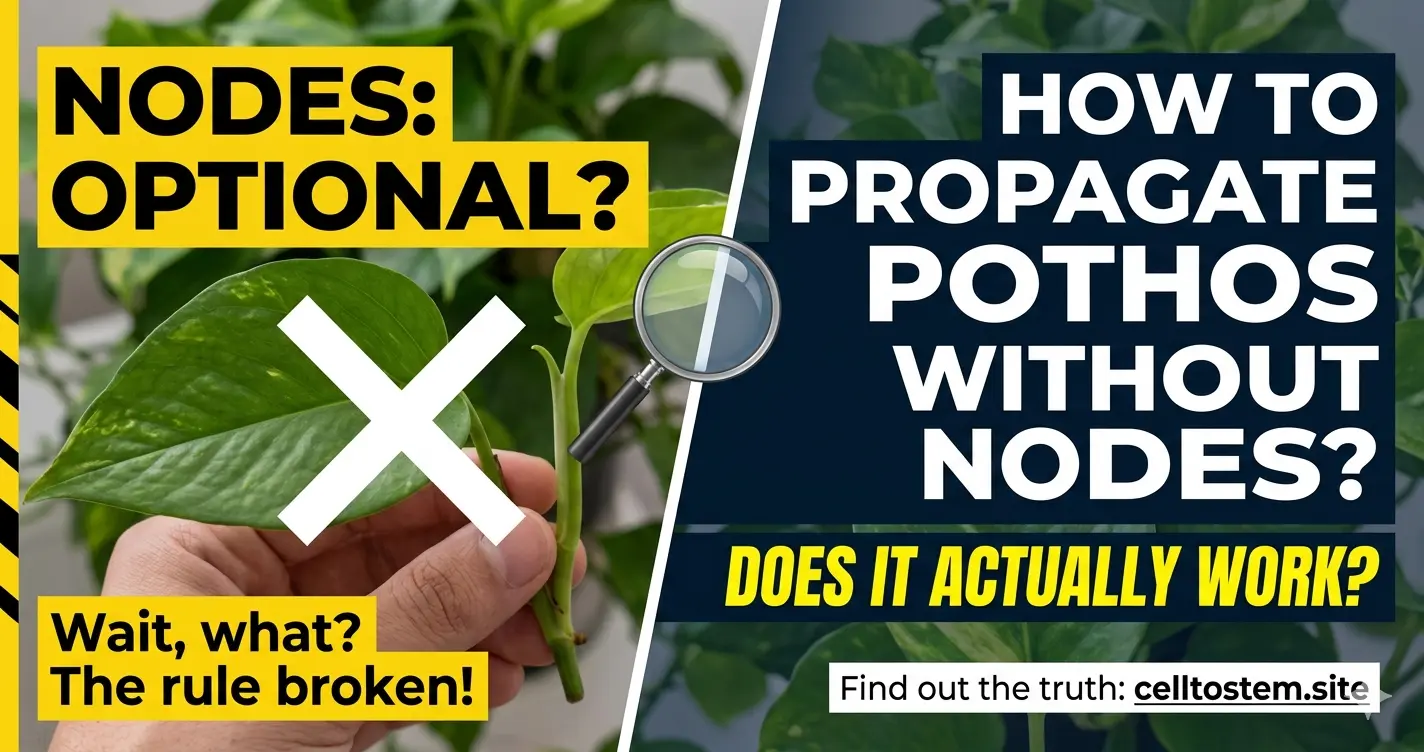
The Big Question: Can You Really Propagate Pothos Without Nodes?
If you are a plant lover, you have probably been there. You accidentally snap off a beautiful, healthy leaf from your Epipremnum aureum (Golden Pothos). You look at that single green leaf and wonder, “Can I save this?” You want to know if pothos plant multiplication is possible without that little brown bump on the stem known as a node.
The short answer is: It is complicated.
In the world of pothos vine propagation, the node is like the “brain” of the cutting. It contains the cells needed to create both roots and new stems. However, there is a lot of talk in the plant community about pothos cutting without node survival. In this guide, we will dive deep into the science, the “zombie leaf” phenomenon, and the best method for propagating pothos when you are working with limited material.
Quick Answer: While a leaf without a node can sometimes grow roots, it almost never grows into a full new plant. These are often called “zombie leaves.” For a successful, growing vine, you must have at least a tiny piece of the stem (the node) attached.
Understanding the “Zombie Leaf” Phenomenon
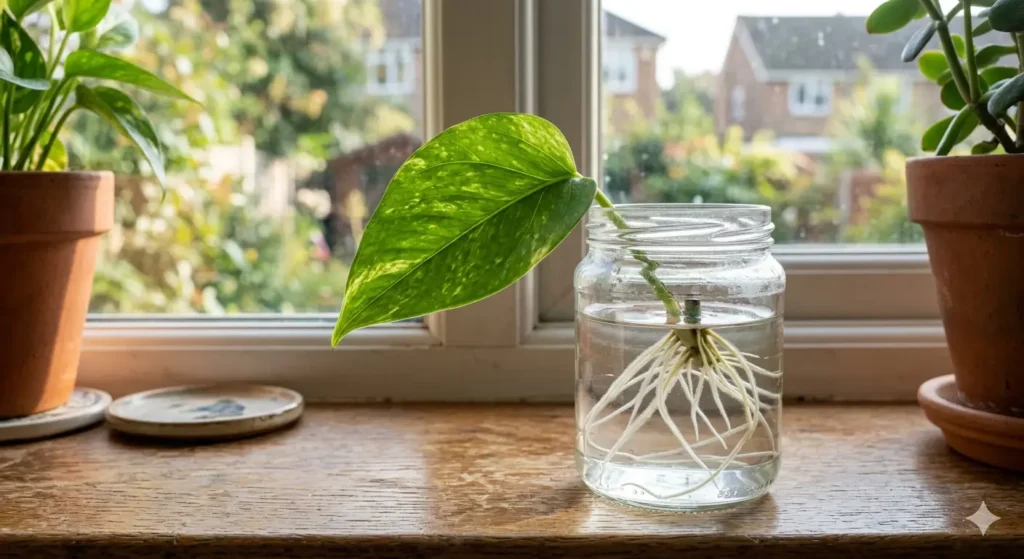
When people talk about pothos propagation from single leaf cuttings, they are often seeing roots develop from the petiole (the leaf stalk). This is exciting! You see white roots growing in your water jar and think you’ve done it.
However, without a node, the plant lacks the “axillary bud.” This bud is the only part of the plant capable of sending out a new vine. Your leaf might live for a year or more in a pot, staying green and rooted, but it will never get any bigger. This is the pothos plant cloning method that results in a beautiful, but stationary, single leaf.
Best Method for Propagating Pothos (The Single-Node Secret)
If you want a full plant, you don’t need a long vine. You only need one node. Many people think they are propagating “without nodes” when they are actually using the best method for propagating pothos called “single-node propagation.”
By cutting just a tiny 1/2 inch section of the vine where the leaf meets the stem, you include the node. This is the gold standard for rooting pothos cuttings in water.
Step-by-Step for Success:
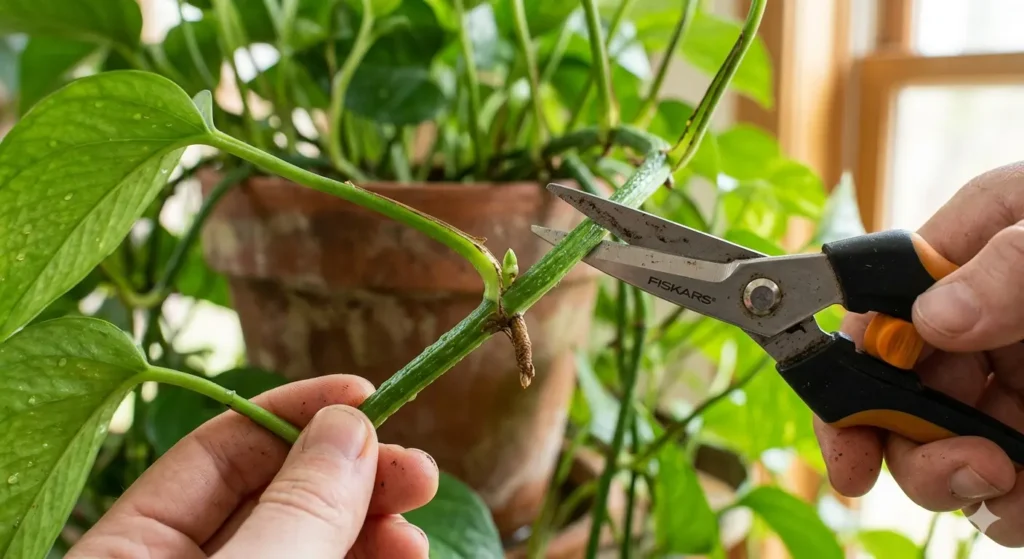
- Identify the Node: Look for the small brown bump or the point where the leaf joins the main vine.
- The Cut: Use sharp, clean shears. Cut a small “T” shape so the leaf has a tiny bit of the main stem attached.
- Water Setup: Place it in a small jar. The best water for pothos leaf propagation is filtered water or tap water that has sat out for 24 hours to let the chlorine evaporate.
Ideal Conditions for Your Cuttings
To give your devil’s ivy leaf cuttings the best chance at life, you need to mimic their tropical home. Even if you are trying a “no-node” experiment, these factors determine if the leaf rots or survives.
Light and Temperature
The best light conditions for pothos propagation involve bright, indirect sunlight. Think of a spot near a north or east-facing window. Avoid direct hot sun, which will “cook” the leaf in its water jar. Keep the room between 70°F and 80°F.
Humidity and Air
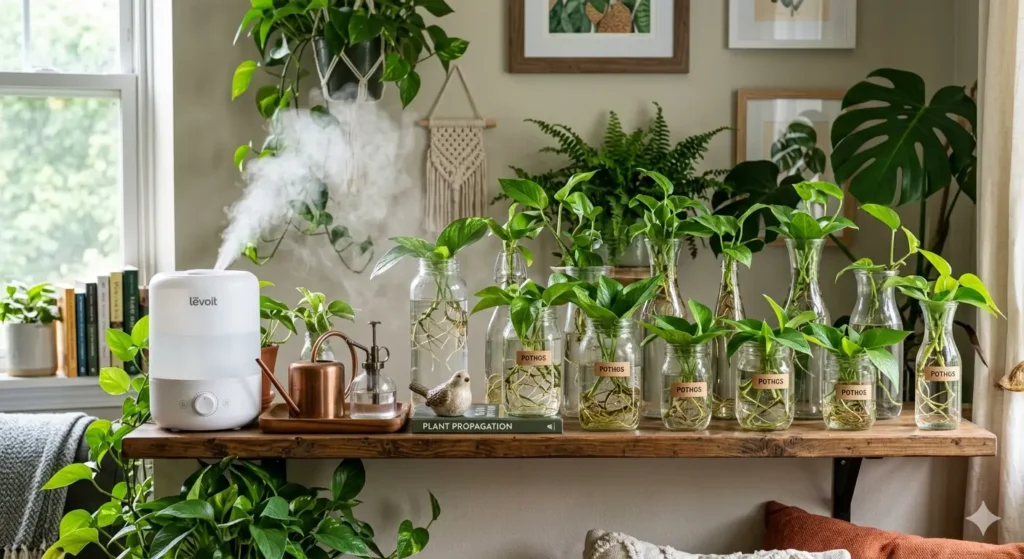
Pothos love moisture. The best humidity level for pothos leaf propagation is around 60% or higher. If your house is dry, you can place a clear plastic bag over your propagation jar to create a mini-greenhouse. This is a top-tier pothos stem propagation method for faster results.
Soil vs. Water: Which is Better?
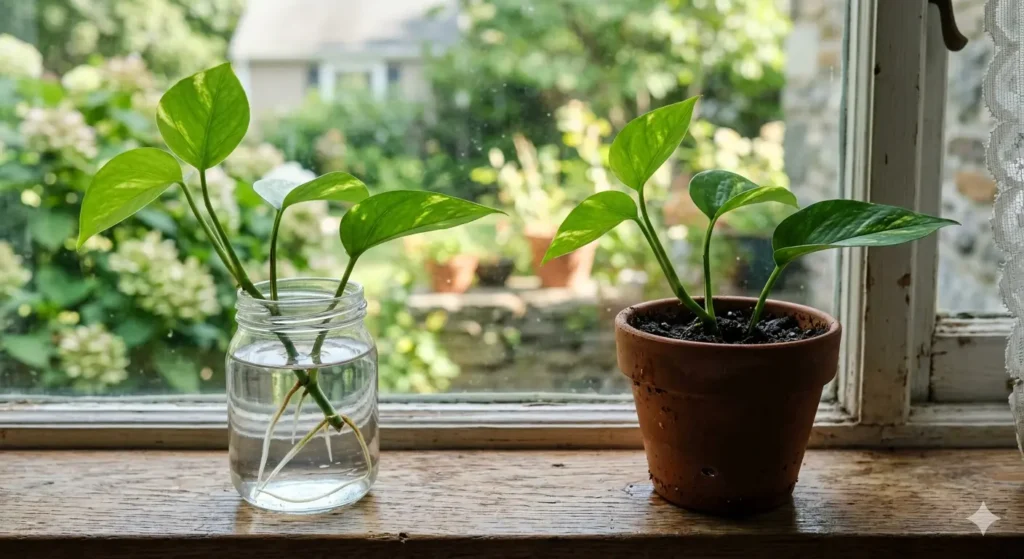
While most beginners love rooting pothos cuttings in water because you can see the progress, soil has its perks.
The best soil for pothos propagation without nodes (or with them) is a mix of 50% potting soil and 50% perlite or orchid bark. This ensures the tiny roots get enough oxygen. If you choose soil, using the best rooting hormone for pothos without nodes can help speed up the process by “tricking” the leaf cells into specialized root cells faster.
Comparison Table: Water vs. Soil Propagation
| Feature | Water Propagation | Soil Propagation |
| Visibility | High (See roots grow) | Low (Hidden) |
| Success Rate | Very High | Moderate |
| Best Container | Best container for pothos water propagation is a narrow-neck glass bottle. | Small terracotta or plastic nursery pot. |
| Maintenance | Change water weekly. | Keep soil consistently moist. |
Advanced Tips for 2026 Growers
As we move into 2026, plant science has given us better ways to care for our green friends.
- Timing: The best time to propagate pothos without nodes (or with) is during the Spring and Summer. This is when the plant’s natural growth hormones are peaking.
- Variety Matters: Some types are tougher than others. The best pothos variety for leaf propagation is the classic Golden Pothos or the Jade Pothos. Variegated types like “N’Joy” or “Thai Constellation” (if you’re lucky to have one) grow much slower.
- Nutrition: Don’t overdo it. The best fertilizer for pothos cuttings without nodes is a highly diluted liquid seaweed extract or a 10-10-10 balanced fertilizer at 1/4 strength, used only after roots are at least an inch long.
Troubleshooting Common Issues
Is your leaf turning yellow? Or perhaps the bottom is turning black and mushy?
- Yellowing: Usually means too much direct sun or a lack of oxygen in the water.
- Rot: This happens if you don’t change the water or if the water is too cold.
- No Growth: If you have been waiting for 3 months and see roots but no new leaves, you likely have a “zombie leaf” without a node.
Final Thoughts on Pothos Propagation
In the end, while you can technically keep a pothos leaf alive without a node, your dream of a long, trailing vine requires that tiny piece of stem. If you find yourself with a leaf that has no node, go ahead and put it in water! It makes a beautiful, long-lasting desk decoration. But for true pothos plant multiplication, always look for the node.
“Trying to pull roots from a node-free stem forces us to look closely at how these plants absorb oxygen in water. For a deeper look into their aquatic limits, check out our dive oncan pothos grow underwatercompletely over extended periods.”
Thanks for visit website! We value your feedback.