

Quick Answer: The Pothos Sweet Spot
For the fastest rooting, keep your pothos propagation between 70°F and 80°F (21°C–27°C) with humidity levels above 60%. While these plants are tough, staying within this “tropical window” can cut your rooting time in half compared to cooler, dryer rooms.
Pothos Propagation Temperature and Humidity Requirements: The Ultimate Guide
So, you want to grow more pothos? You aren’t alone. Whether it is a Golden Pothos or a trendy Cebu Blue, these vines are the kings of indoor gardening. But while sticking a cutting in a jar of water seems easy, there is a science to getting those roots to pop out fast.
To turn a simple snip into a thriving new plant, you need to master two things: warmth and moisture. In this guide, we will break down the exact settings your “Devil’s Ivy” needs to grow strong, healthy roots every single time.
1. The Best Temperature for Pothos Propagation
Temperature is the “engine” that drives plant growth. If it is too cold, the plant goes to sleep. If it is too hot, it gets stressed.
Propagation in Water vs. Soil
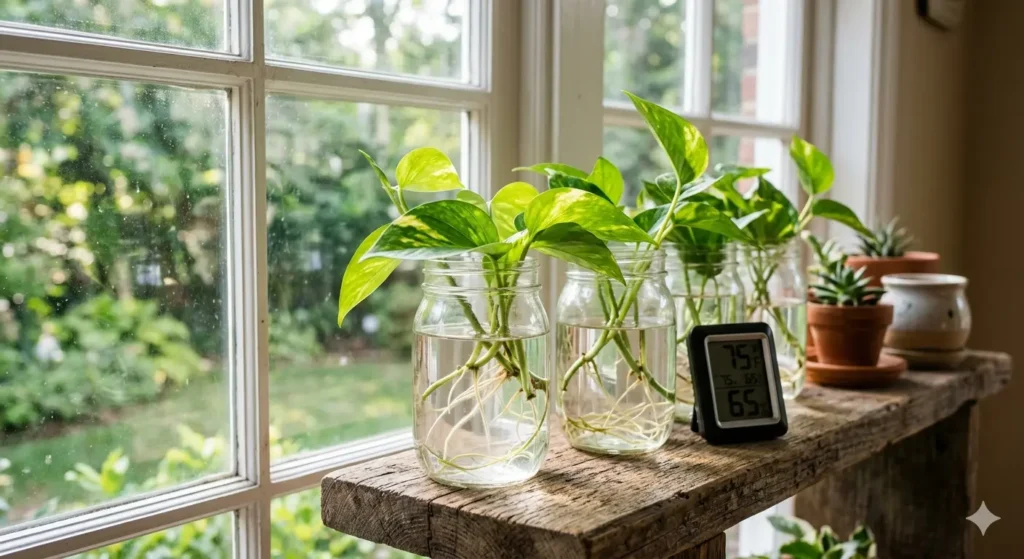
When looking for the best temperature for pothos propagation in water, aim for a steady 72°F to 75°F. Water holds onto cold more than air does, so if your windowsill is drafty, the water temperature might drop too low, causing the stem to rot before it can root.
For those planting directly into dirt, the best soil temperature for pothos root growth is slightly higher, around 75°F to 80°F. Warm soil encourages “auxins” (the plant’s natural growth hormones) to head straight to the nodes.
Seasonal Timing
The best time of year for pothos propagation temperature is definitely late spring or early summer. During these months, the natural pothos propagation seasonal considerations work in your favor. The air is naturally warmer, and the light is stronger, which gives the plant more energy to build a root system.
Pro Tip: If you are propagating in the winter, use a seedling heat mat. It keeps the pothos stem cutting warmth requirements met even when your house is chilly.
2. Humidity: The Secret to Faster Rooting
Pothos are tropical plants. In the wild, they grow in rainforests where the air is thick with moisture. When you take a cutting, it no longer has a root system to drink water. It has to rely on the humidity in the air to keep its leaves from wilting.
Finding the Perfect Level
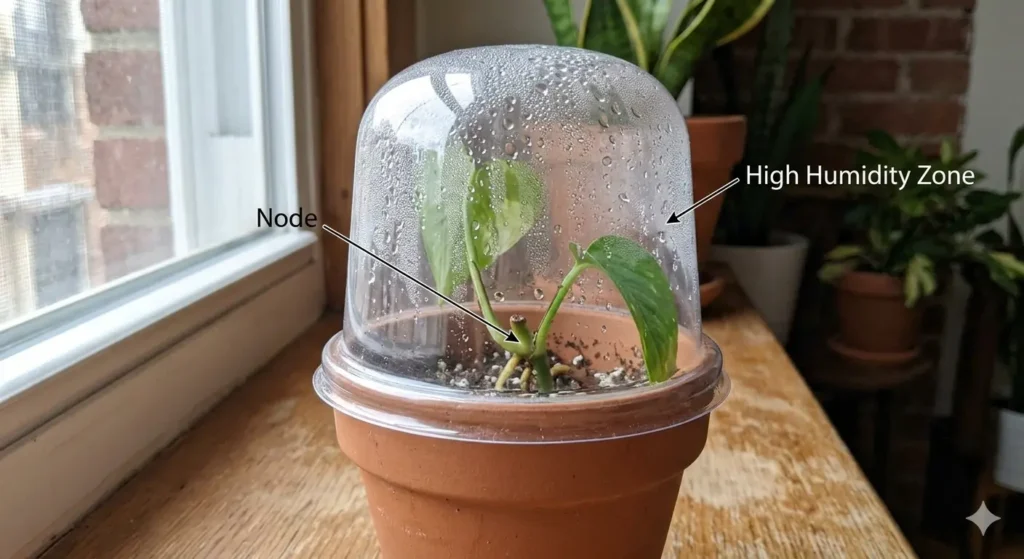
The best humidity level for pothos cuttings in soil is between 60% and 70%. If your home is dry (especially during the winter), the cutting will lose water through its leaves faster than it can take it in. This is why many growers use a best humidity dome for pothos propagation. A simple clear plastic bag or a plastic soda bottle top placed over the pot creates a perfect indoor plant propagation microclimate.
Dealing with Dry Climates
If you live in a desert or use a lot of air conditioning, you need the best method for pothos propagation in dry climates. Instead of just misting (which only helps for a few minutes), try a pebble tray. Fill a tray with stones and water, then set your jars or pots on top. As the water evaporates, it creates a “bubble” of moisture right where the plant needs it.
3. Best Room Conditions for Pothos Propagation
Where you put your cuttings matters just as much as the temperature. The best room conditions for pothos propagation involve a mix of light and airflow.
- Bright Indirect Light: Never put cuttings in direct hot sun. It will cook the water or dry out the soil.
- Airflow: While we want high humidity, we don’t want stagnant air. A tiny bit of air movement prevents mold from growing on your pothos vine propagation environment.
- Stability: Avoid placing your plants near AC vents or heaters. Rapid “thermal shock” is a quick way to kill a new cutting.
Tools to Help You Succeed
If you want to be precise, here are the best tools for maintaining pothos propagation humidity:
- Digital Hygrometer: This tiny device tells you the exact temperature and humidity.
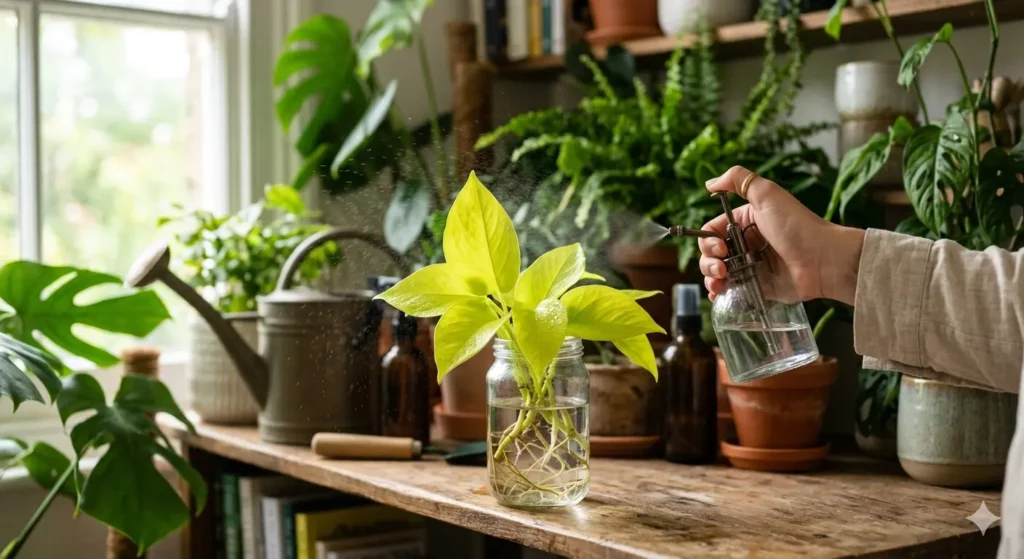
- Misting Bottle: Great for a quick boost of tropical plant propagation humidity.
- Seedling Heat Mat: Perfect for keeping pothos plant rooting conditions stable during cold nights.
4. Best Pothos Varieties for Easy Propagation
Not all pothos are created equal. If you are a beginner, choosing the right variety can make a huge difference.
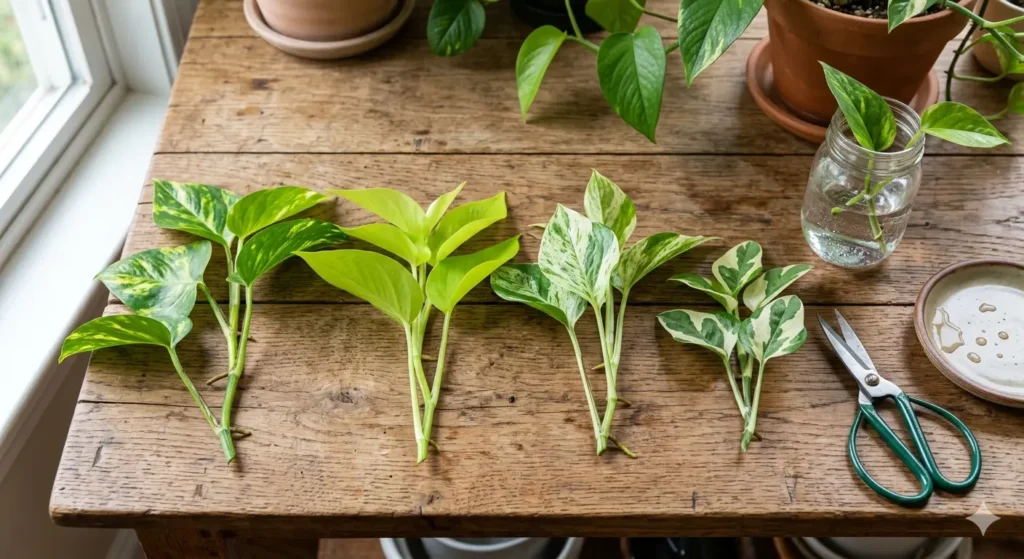
- Golden Pothos: The undisputed champion. It roots faster than almost any other houseplant.
- Marble Queen: Beautiful, but grows a bit slower due to the white variegation.
- Neon Pothos: Very hardy and handles houseplant propagation moisture levels quite well.
- Satin Pothos (Scindapsus): Technically a cousin, but it loves the same epipremnum aureum propagation climate and looks stunning with its silver spots.
5. Step-by-Step Best Practices for Temperature Control
To ensure your pothos aerial root development conditions are perfect, follow these best practices for pothos propagation temperature control:
- Check your water: If the water feels “ice cold” to your finger, it’s too cold for the plant. Let it sit at room temperature for an hour before adding your cuttings.
- Monitor the “Node”: This is the little brown bump where the leaf meets the stem. This part must be kept warm and moist, as it is where the new roots will emerge.
- Group your plants: Placing several cuttings together naturally raises the local humidity through a process called transpiration.
Summary Table: The Ideal Setup
| Factor | Ideal Range | Why it Matters |
| Air Temperature | 70°F – 80°F | Speeds up cell division and root growth. |
| Water/Soil Temp | 72°F – 78°F | Prevents rot and encourages auxins. |
| Humidity Level | 60% – 75% | Stops the leaves from wilting while roots form. |
| Light Quality | Bright Indirect | Provides energy without burning the tissue. |
Final Thoughts
Mastering pothos propagation temperature and humidity requirements isn’t about being a scientist. It’s about mimicking the tropical home these plants love. If you keep them warm, give them plenty of “breathable” moisture, and stay patient, you will have a forest of new plants in no time.
Happy planting!
Thanks for visit website! We value your feedback.