
Quick Answer: Pothos (Devil’s Ivy) can grow with its roots and stems underwater, but it cannot survive being fully submerged long-term. While the roots thrive in aquariums and act as a powerful natural filter, the leaves must remain above the water line to breathe. If leaves are kept underwater for more than a few weeks, they will likely rot and decay.
Can Pothos Grow Underwater? The Real Truth
If you have ever seen a lush vine trailing out of a fish tank, you have likely wondered: can pothos grow underwater? The short answer is yes and no. Pothos (Epipremnum aureum) is a semi-aquatic superstar, but it isn’t a true seaweed.
In the wild, these plants climb trees in tropical rainforests. In your home, they are remarkably flexible. They love having their “toes” (roots) in the water, but they need their “lungs” (leaves) in the air. If you submerge the entire plant, the leaves will eventually suffocate, turn yellow, and rot away. However, by keeping the foliage above the surface, you unlock one of nature’s best water filters.
Why Pothos and Water are a Perfect Match
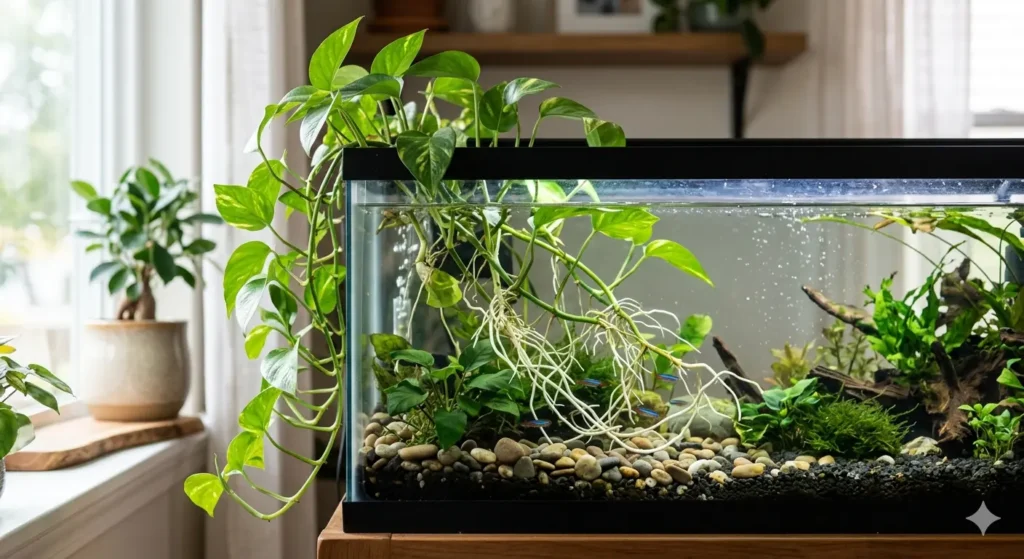
Pothos is famous for being hard to kill. This “Devil’s Ivy” is one of the best pothos for beginners underwater because it adapts to low oxygen levels quickly. When you place a cutting in a tank, it undergoes a transformation. It stops growing “soil roots” and starts growing “water roots.” These water roots are fuzzy and white, designed specifically to pull nutrients directly from the liquid.
Using pothos in your aquarium isn’t just about looks. It is a functional powerhouse. The plant acts as a biological filter, sucking up nitrates and ammonia that can be harmful to your fish.
Best Pothos Varieties for Water Propagation
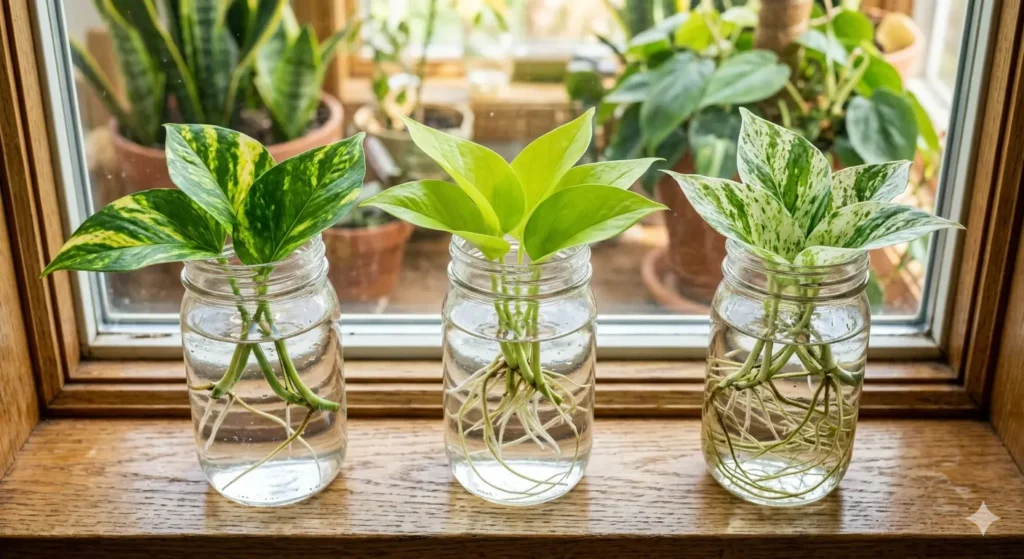
Not all pothos are created equal. If you are looking for the best pothos varieties for water propagation, here are the top picks:
- Golden Pothos: The toughest of the bunch and the fastest grower.
- Marble Queen: Beautiful white variegation, but grows a bit slower.
- Neon Pothos: Offers a bright lime-green pop that looks amazing against dark aquarium backgrounds.
- Cebu Blue: A sleek, silvery-blue variety that handles high humidity perfectly.
Setting Up Your Underwater Pothos
To succeed, you need to follow a few simple steps. You can’t just throw a whole pot of dirt into your fish tank!
- Clean the Roots: If you are moving a plant from soil, wash the roots completely. Any leftover dirt can cause bacterial blooms in your tank.
- Find the Node: When taking a cutting, ensure you have a “node” (the little brown bump on the stem). This is where the pothos water roots development happens.
- Positioning: Use a rim-mount holder or a simple suction cup to keep the stem secure. Ensure the leaves stay dry.
- Lighting: While pothos is known for low-light underwater growth, it still needs some ambient room light or a basic LED aquarium light to thrive.
Best Containers for Pothos Underwater Growth
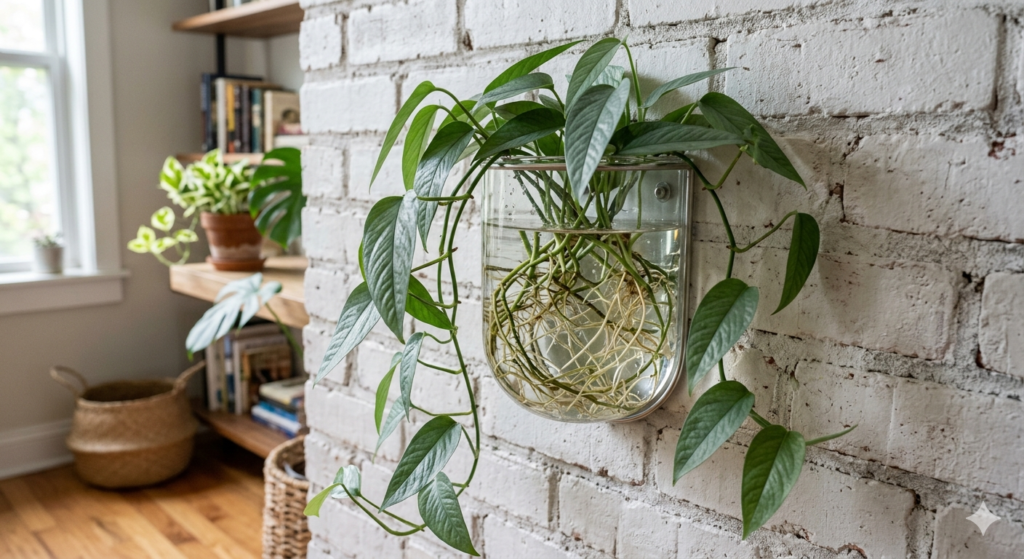
While fish tanks are popular, you don’t need a 50-gallon setup. The best containers for pothos underwater growth include glass carafes, hanging wall vases, or even simple mason jars. As long as the container is clean and allows light to reach the leaves, the pothos will be happy.
Image Prompt 3: A sleek, modern wall-mounted glass planter filled with water, containing a Cebu Blue Pothos plant with long roots visible through the glass.
Pothos in Aquariums and Fish Tanks
Many hobbyists specifically look for the best pothos for fish tank underwater growth. This is often called “aquaponics” or a “riparium” setup.
Is it safe? Yes! Pothos is generally non-toxic to fish. In fact, many fish like Bettas or Goldfish enjoy hiding in the dense root curtains. These roots provide a natural “jungle” feel that reduces fish stress.
Best Water Conditions for Pothos Underwater Growth
Pothos isn’t picky, but it has preferences. For the best results:
- Temperature: 70°F to 80°F (perfect for tropical fish).
- pH Level: 6.0 to 7.5 is the “sweet spot.”
- Flow: Gentle water movement helps prevent stagnant film from forming on the roots.
If you are running pothos in aquaponics systems, you won’t need much fertilizer. The fish waste provides all the nitrogen the plant needs. However, if you have a “plant-only” jar, a drop of liquid seaweed fertilizer every month will keep the leaves vibrant.
Advanced Growth: Hydroponics and Terrariums
For those looking to go beyond a simple jar, pothos is one of the best pothos for hydroponic systems. Because it is so hardy, it can survive in nutrient-rich, soil-less environments where other plants might fail.
In a pothos underwater terrarium (or paludarium), you can create a “waterfall” effect. By allowing the vines to grow down a damp rock wall into a pool of water, you mimic its natural tropical habitat.
Best Plants to Grow with Pothos Underwater
If you want a diverse “water garden,” consider these best plants to grow with pothos underwater:
- Anubias: A true aquatic plant that can be fully submerged.
- Java Fern: Great for attaching to driftwood alongside pothos roots.
- Spider Plants: Similar to pothos, they love having their roots in water but leaves in the air.
- Peace Lilies: Another excellent nitrate-sucker for the top of the tank.
Common Problems and How to Fix Them
Even the toughest plants can run into trouble. If your submerged pothos plant looks sad, check these three things:
- Yellow Leaves: This usually means the leaf is too wet or the plant is lacking iron. Ensure the leaf is above the water line.
- Brown Mushy Roots: This is root rot. It happens if there is zero oxygen in the water. Try adding an air stone to your tank or changing the water in your vase more often.
- Algae on Roots: If the roots are in direct, heavy sunlight, algae will grow on them. Simply rinse the roots under a tap to clean them off.
Final Thoughts
So, can pothos grow underwater? As long as you keep the leaves high and dry, the answer is a resounding yes. Whether you are looking for the best pothos for underwater aquariums to help your fish or just want a low-maintenance way to decorate your home, this plant is a winner. It is the ultimate bridge between the world of houseplants and the world of water.