
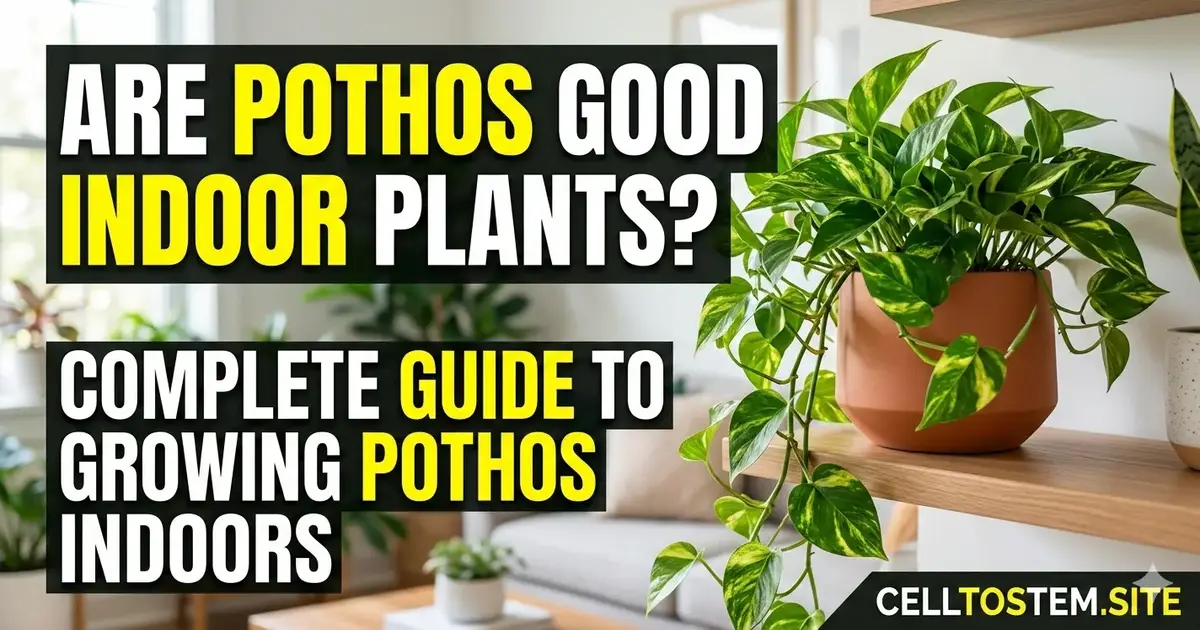
Yes, pothos are exceptional indoor plants. They survive low light, tolerate irregular watering, and actively remove indoor air pollutants. This guide focuses specifically on how pothos perform in indoor environments and which varieties suit different spaces.
Why Pothos Thrive Indoors
Pothos (Epipremnum aureum) succeed indoors because they adapt to conditions found in homes and offices:
- Light flexibility: Grow in bright indirect light or corners with only fluorescent lighting
- Temperature tolerance: Thrive in standard indoor ranges of 65-80°F (18-27°C)
- Humidity adaptation: Perform well in dry air conditions (30-60% humidity)
- Water forgiveness: Recover quickly if soil dries out completely between waterings
Practical example: An office worker placed a golden pothos on a filing cabinet 12 feet from a north-facing window. The plant received no direct sun and was watered every two weeks. After eight months, vines reached the floor and produced new leaves monthly.
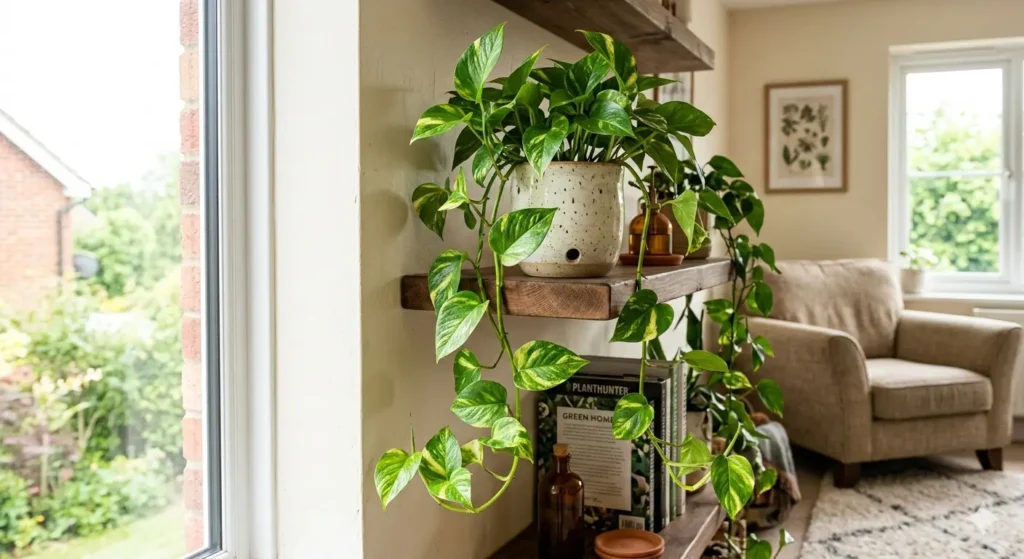
Best Pothos Plants for Low Light Indoor Areas
Low light means no direct sun reaching the plant—typically spots 8-10 feet from windows or rooms with artificial lighting only.
| Pothos Variety | Low Light Performance | Leaf Appearance |
|---|---|---|
| Jade pothos | Excellent—holds color best | Solid dark green leaves |
| Golden pothos | Good—may lose some variegation | Green with yellow streaks |
| Marble Queen | Fair—variegation fades significantly | White and green marbled |
Jade pothos maintains photosynthesis efficiency in low light better than variegated types. If you have a dim corner, choose jade over marble queen.
Practical example: A bathroom with one small frosted window received a jade pothos on the counter. After six months with only ambient light and weekly shower humidity, the plant produced six new leaves and showed no signs of stress.
Best Indoor Plants for Air Purification Like Pothos
NASA Clean Air Study identified pothos as effective at removing benzene, formaldehyde, and xylene. These plants offer similar air-purifying benefits:
- Peace lily (Spathiphyllum): Removes acetone and ammonia, flowers indoors
- Snake plant (Sansevieria): Filters formaldehyde and benzene, tolerates extreme neglect
- Spider plant (Chlorophytum comosum): Removes carbon monoxide and xylene, produces plantlets
- Philodendron heartleaf: Similar growth habit to pothos, same pollutant removal
Practical example: A home office with new furniture (off-gassing formaldehyde) placed three plants on shelves: a golden pothos, a snake plant, and a peace lily. After three weeks, the “new furniture smell” noticeably decreased.
Best Pothos Varieties for Hanging Baskets Indoors
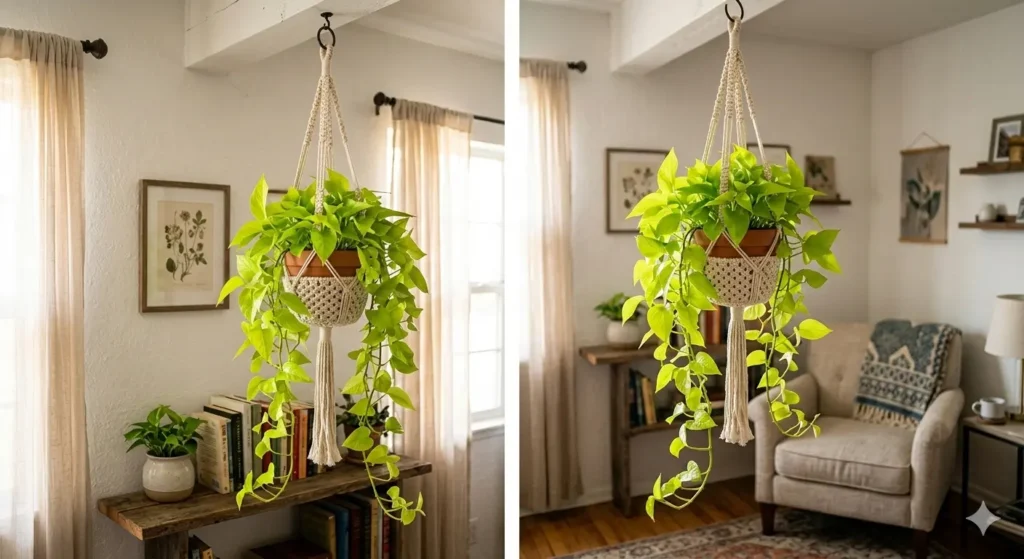
Hanging baskets showcase pothos trailing growth. These varieties produce the longest vines and fullest appearance:
- Neon pothos: Bright chartreuse leaves create visual impact, vines reach 6-8 feet
- Manjula pothos: Wide heart-shaped leaves with cream variegation, grows fuller rather than long
- Pearls and Jade: Compact growth with white-green flecks, excellent for smaller baskets
- Golden pothos: Fastest grower, vines can exceed 10 feet in two years
Practical example: A living room corner with a macrame hanger received a neon pothos. Within 18 months, vines cascaded four feet down, creating a living curtain visible from the entryway.
Best Plants for Beginners Similar to Pothos Indoors
If you want variety beyond pothos, these plants share the same forgiving nature:
- Philodendron Brasil: Identical care requirements, variegated lime green leaves
- ZZ plant (Zamioculcas zamiifolia): Survives months without water, glossy leaves
- Peperomia obtusifolia: Thick succulent-like leaves, tolerates low light
- Aglaonema (Chinese evergreen): Colorful foliage, handles neglect and low light
Practical example: A college student killed multiple succulents but kept a pothos alive for two years. They added a philodendron Brasil to their collection, placed it on the same watering schedule, and it thrived equally well.
Best Pothos for Bathrooms and Humid Indoor Spaces
Bathrooms provide humidity that pothos love. These varieties perform exceptionally well:
- Global green pothos: Dark and light green variegation, tolerates constant moisture
- Cebu blue pothos: Blue-green elongated leaves, develops fenestrations in high humidity
- Satin pothos (Scindapsus pictus): Velvety silver-speckled leaves, thrives in steamy conditions
- Jessenia pothos: Golden-green marbled leaves, similar to golden but more consistent color
Practical example: A master bathroom with a walk-in shower (no window) installed a satin pothos on a high shelf. Daily steam from showers provided sufficient moisture. After one year, vines trailed five feet down the wall with no leaf browning.
Best Indoor Plants for Offices Including Pothos
Office environments present unique challenges: fluorescent lighting, dry air from HVAC, and weekend neglect. These plants survive and improve office air quality:
- Pothos (any variety): Tolerates fluorescent light, removes VOCs from electronics
- ZZ plant: Handles weekly watering or complete neglect
- Dracaena marginata: Tall structure, removes xylene and trichloroethylene
- Philodendron heartleaf: Trails across desks or cubicle walls
Practical example: A cubicle with overhead fluorescent lights (no windows) housed a golden pothos in a 6-inch pot. The employee watered every Friday before leaving. The plant grew steadily and required pruning after 10 months.
Best Pothos for Small Apartments and Indoor Spaces
Limited square footage requires compact plants or those that grow vertically. These options maximize greenery without floor space:
- Pothos on trellis: Train vines upward instead of outward
- Pothos in small pots: 4-inch pots support healthy plants for 12-18 months
- Pothos in wall planters: Mount pots vertically to save surface space
- Mini pothos varieties: N’Joy and Pearls and Jade grow more slowly and compactly
Practical example: A 300-square-foot studio apartment used wall-mounted glass globes with golden pothos cuttings. Vines trailed down the wall, creating greenery without taking up shelf or floor space.
Best Trailing Plants for Shelves Like Pothos Indoors
Bookshelves, kitchen shelves, and floating shelves benefit from trailing plants. These alternatives offer similar cascading effects:
- String of hearts (Ceropegia woodii): Delicate trailing vines with heart-shaped leaves
- Swiss cheese vine (Monstera adansonii): Holey leaves, faster grower than pothos
- Creeping fig (Ficus pumila): Small leaves, dense coverage
- Hoya carnosa: Thick waxy leaves, fragrant flowers with maturity
Practical example: A kitchen shelf above a coffee station held a string of hearts trailing down next to mugs. The plant received bright indirect light and was watered when leaves felt slightly soft—similar maintenance to pothos but with a finer texture.
Best Pet-Safe Indoor Plants Alternatives to Pothos
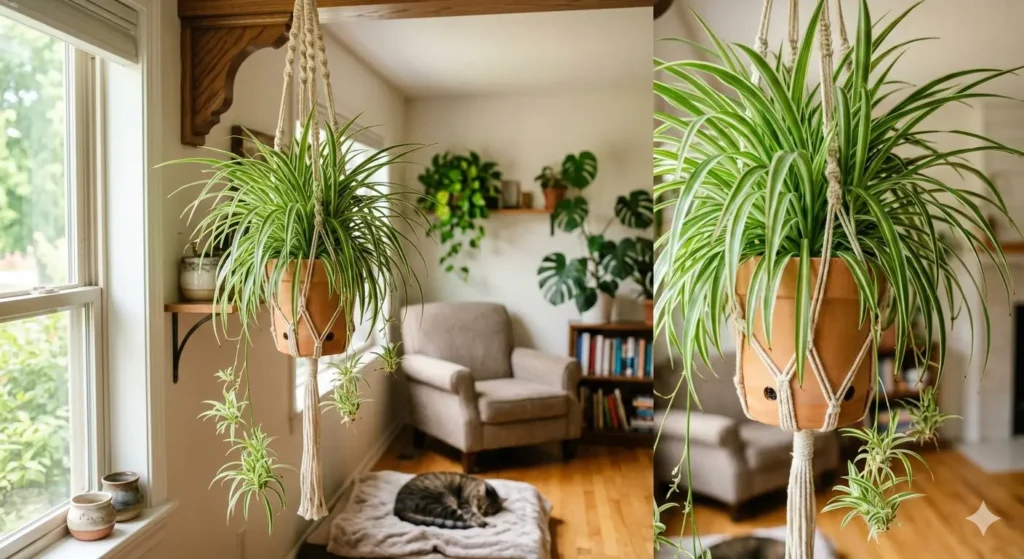
Important: Pothos contain calcium oxalate crystals toxic to cats and dogs. If pets nibble plants, choose these safe alternatives with similar appearance:
- Spider plant: Long arching leaves, produces baby plants
- Parlor palm: Feathery foliage, non-toxic, tolerates low light
- Calathea: Bold patterns, moves leaves at night, completely safe
- Peperomia varieties: Small, varied leaf shapes, non-toxic
- Boston fern: Classic hanging plant, needs consistent moisture
Practical example: A cat owner discovered their kitten chewing pothos leaves. They replaced it with a spider plant hung in the same location. The cat nibbled the spider plant with no ill effects, and the plant continued producing “spiderettes.”
Best Fast-Growing Indoor Plants Like Pothos
If you want rapid coverage or quick results, these plants match or exceed pothos growth rates:
- Philodendron scandens: Grows 4-6 inches per month in growing season
- Sweet potato vine (Ipomoea batatas): Extreme grower, 12+ inches monthly indoors
- Tradescantia zebrina (inch plant): Purple trailing leaves, grows visibly weekly
- Arrowhead plant (Syngonium podophyllum): Bushy or trailing, fast in bright light
- Wandering Jew: Bright purple and silver, propagates instantly in water
Practical example: A bare wall in a bright entryway needed coverage. The homeowner planted golden pothos on one side and tradescantia on the other. The tradescantia covered its section in four months; pothos took eight months.
Pothos Plant Humidity Tolerance Indoors
Pothos adapt to average home humidity but show visible signs when conditions are extreme:
Low humidity (below 30%):
- Brown leaf tips
- Slowed growth
- Leaves curling slightly
High humidity (above 60%):
- Faster growth
- Larger leaves
- Possible aerial root development
Optimal range: 40-50% relative humidity—typical for most homes
Practical example: A winter home with forced air heat dropped to 25% humidity. A golden pothos developed brown edges on three leaves. The owner added a small pebble tray with water beneath the pot. Within two weeks, new leaves emerged without browning.
Pothos Plant Soil Moisture Requirements Indoors
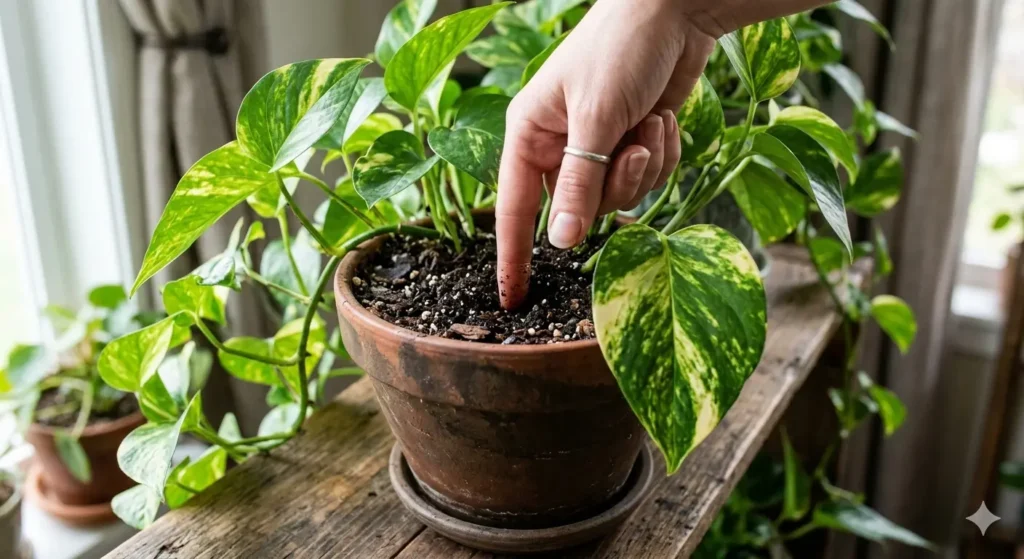
Understanding pothos watering prevents the most common killer: root rot.
When to water:
- Stick finger 1-2 inches into soil
- Water only when top inch feels dry
- For most homes: every 7-14 days
Signs of overwatering:
- Yellow lower leaves
- Black mushy stems
- Fungus gnats in soil
Signs of underwatering:
- Drooping vines
- Curled leaves
- Crispy brown edges
Practical example: A homeowner watered their pothos every Monday regardless of soil condition. After three months, leaves yellowed and stems softened. They switched to checking soil moisture before watering—now watering every 10-14 days instead of 7—and the plant recovered fully.
Pothos Plant Temperature Range for Indoor Growth
Pothos are tropical plants but tolerate typical indoor temperature fluctuations:
| Condition | Temperature | Effect |
|---|---|---|
| Optimal | 65-85°F (18-29°C) | Active growth, new leaves |
| Tolerable | 60-65°F (15-18°C) | Slowed growth, no damage |
| Dangerous | Below 50°F (10°C) | Leaf damage, possible death |
| Dangerous | Above 95°F (35°C) | Wilting, leaf scorch |
Practical example: A pothos placed near a drafty window in winter experienced 55°F nights. Leaves developed dark spots and stopped growing. Moving it to an interior shelf with stable 68°F temperatures stopped the damage within two weeks.
Indoor Vine Plants Similar to Pothos
For variety in trailing plants, these vines share care requirements with pothos:
- Philodendron micans: Velvet-textured heart leaves, purple-bronze color
- Rhaphidophora tetrasperma (mini monstera): Split leaves, fast climbing
- Cissus rhombifolia (grape ivy): Glossy green leaves, bushier habit
- Syngonium podophyllum: Arrow-shaped leaves, pink or cream variegation available
- Hoya linearis: Fuzzy trailing stems with narrow leaves
Practical example: A collector with 12 pothos varieties wanted different textures. They added a philodendron micans (velvet leaves) and a rhaphidophora tetrasperma (split leaves) to the same shelf, watered them identically, and created visual diversity.
Pothos Plant Variegation Types for Indoor Gardens
Variegation (leaf color patterns) depends on light exposure and genetics:
Types of variegation:
- Chimeral (Golden, Marble Queen): Random patterns, unstable—can revert
- Mutation (Neon): Uniform color change, stable
- Mosaic (Manjula, N’Joy): Patterned distribution, stable but slower growing
Light effects on variegation:
- High light: More variegation, slower growth
- Low light: Less variegation, faster green growth
- No light: Complete reversion to green
Practical example: A marble queen pothos placed in a dim hallway produced entirely green leaves after six months. The owner moved it to a bright kitchen window. New leaves emerged with white patches within three weeks, demonstrating variegation’s light dependence.
Key Takeaways for Indoor Pothos Success
- Light determines appearance: Brighter light maintains variegation; lower light favors green varieties
- Water based on soil feel, not calendar: Check before watering
- Temperature matters: Keep away from cold drafts and heating vents
- Propagation is simple: Cut vines below nodes, place in water for new plants
- Pests are rare: Watch for mealybugs and spider mites on stressed plants
“Their extreme durability and air-purifying qualities prove that pothos are good indoor plants for any modern home. However, if you share your living space with pets, it is crucial to understand if a pothos plant is safe for cats and dogs before choosing your placement.”
Thank You For Visiting Our Website https://celltostem.site/. We Value Your Feeback!