
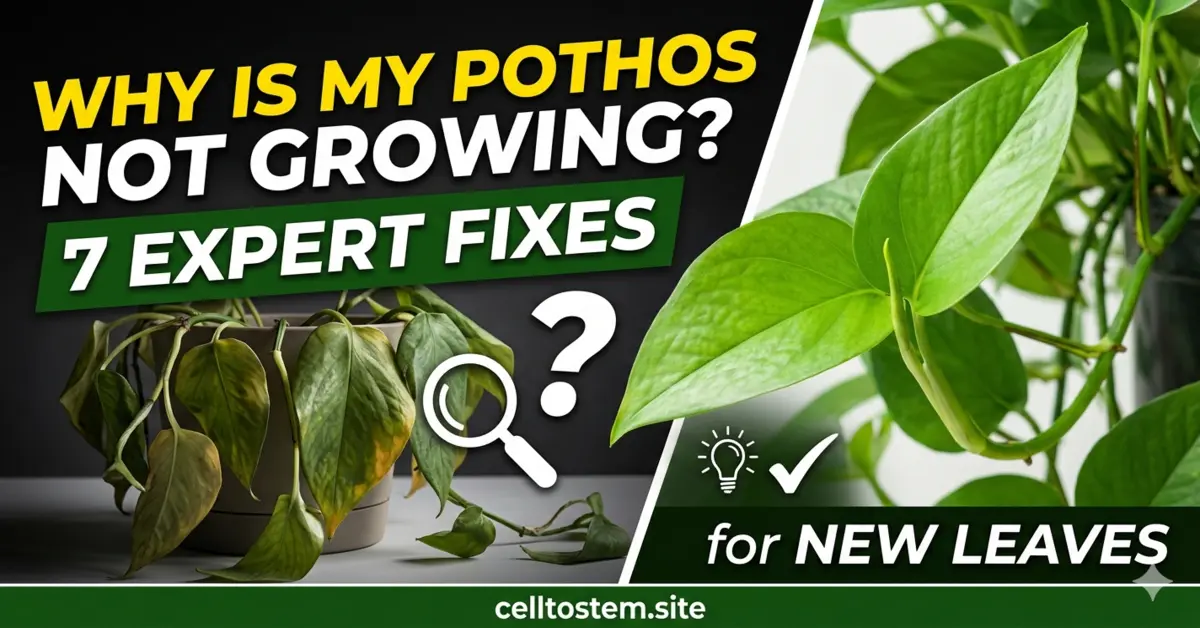
Quick Answer:
Your pothos likely isn’t growing new leaves because of insufficient light or root-bound exhaustion. While they survive in low light, they “freeze” growth to conserve energy. Move your plant to a spot with bright, indirect light, check if roots are circling the bottom of the pot, and ensure you are using a nitrogen-rich fertilizer during the spring and summer months to jumpstart new nodes.
Table of Contents
The Mystery of the Stalled Pothos: Why the “Easiest” Plant Stops Growing
We’ve all been there. You bought a Golden Pothos or a Marble Queen because everyone said they are “impossible to kill.” For the first few months, it was a champion, trailing down your bookshelf like a green waterfall. Then, suddenly, nothing. Weeks turn into months, and you realize you haven’t seen a new leaf spike in ages.
When a pothos plant is not growing, it’s easy to feel like you’ve failed as a plant parent. I remember one specific Neon Pothos I kept on top of a kitchen cabinet. I thought it was happy because it wasn’t dying, but after a year, it hadn’t gained a single inch. It was just… existing. That’s when I realized that surviving is not the same as thriving.
Through trial and error, I’ve learned that these plants are actually very communicative—you just have to know how to read the “silent treatment” they give you. Let’s dive into the professional-grade troubleshooting steps to turn your stalled vine back into a growing machine.
1. Light: The Engine of Growth
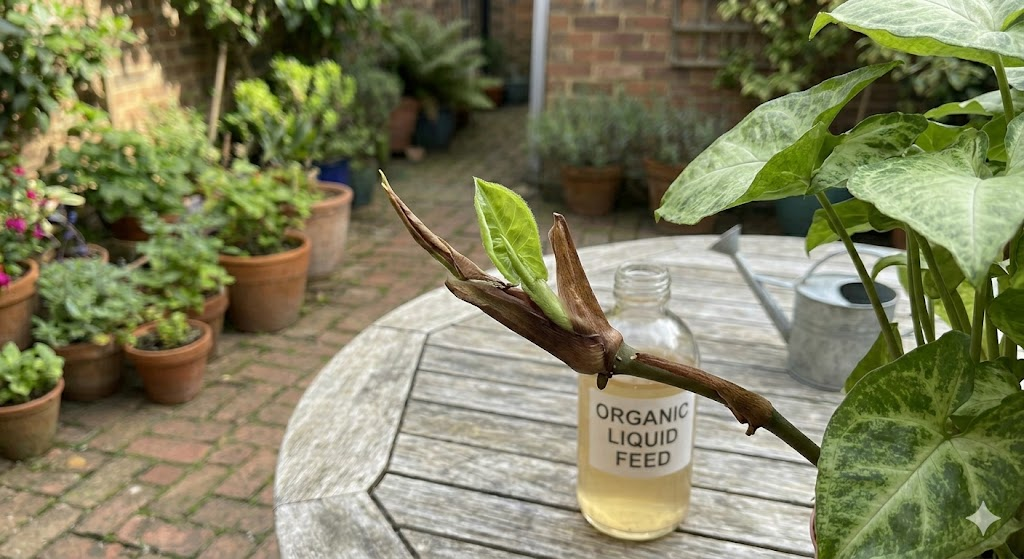
The most common culprit for a lack of new foliage is light—or a lack thereof. While pothos are marketed as low-light plants, that’s a bit of a marketing myth. In low light, a pothos enters a survival mode. It will keep its current leaves, but it won’t have enough excess energy to produce new ones.
To get the best light for pothos growth, you want to aim for bright, indirect sunlight. Think of the light in a room with a large North or East-facing window. If you place your plant in a dark corner, the internodes (the space between leaves) will stretch out, leading to pothos leggy growth. The plant is literally reaching for the sun.
Professional Tip: If your variegated pothos (like a Manjula or Joy) is turning solid green, it’s a desperate cry for more light. The plant is producing more chlorophyll to catch every stray photon it can. Move it closer to a window, and you’ll likely see a new leaf within two weeks.
2. The Watering Goldilocks Zone
Watering is where most people go wrong. I used to be a “calendar waterer”—every Sunday, rain or shine. That’s a recipe for disaster.
The best watering schedule for pothos growth isn’t about a specific day; it’s about the soil’s moisture level. I wait until the top two inches of soil are dry. If you overwater, you risk pothos root rot, which is a silent killer. The roots turn to mush, and the plant can no longer take up nutrients, causing pothos leaf drop and a total halt in growth.
Conversely, if the soil stays bone-dry for too long, the plant goes into a “drought sleep.” It will prioritize keeping its core alive over making new leaves.
3. Soil and Nutrition: Feeding the Beast
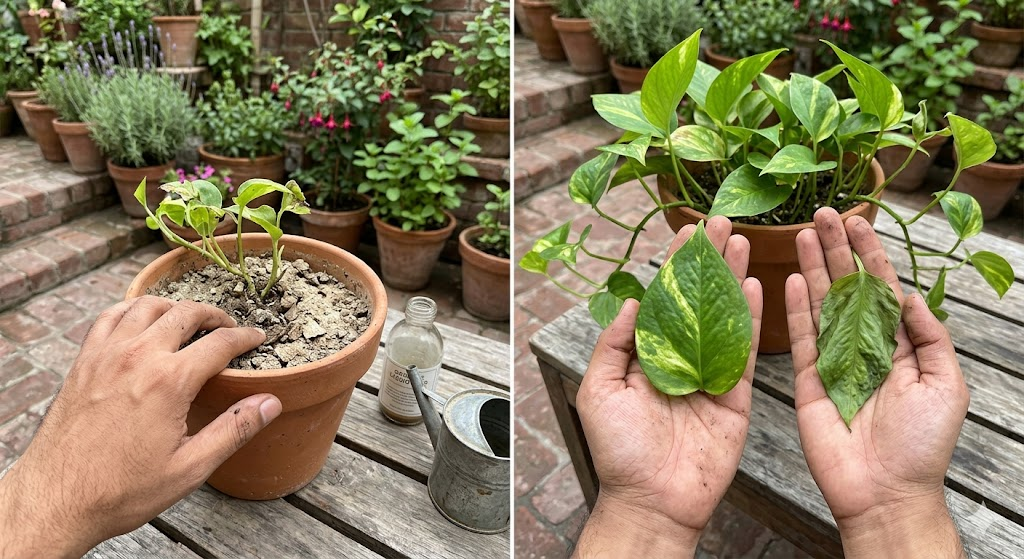
If your light and water are perfect but you still see no progress, your plant might be hungry. Most potting soils only have enough nutrients to last about six months. After that, the “cupboard is bare.”
In my experience, the best fertilizer for pothos new leaves is a balanced, water-soluble fertilizer (like a 20-20-20 ratio) diluted to half strength. I feed mine once a month during the growing season.
However, fertilizer can’t fix bad soil. The best soil mix for pothos new growth is something chunky and well-draining. I personally mix two parts high-quality potting soil with one part perlite and one part orchid bark. This “living” mix allows the roots to breathe. If the soil is too dense, the roots suffocate, and growth stops.
4. Why Pot Size Matters More Than You Think
There’s a common mistake I see: putting a small plant in a massive pot to “give it room to grow.” This actually backfires. In a giant pot, the excess soil stays wet for too long because there aren’t enough roots to drink the water. This leads to the dreaded root rot.
On the flip side, if your plant is “root-bound,” it has no more room to expand. The best pot size for pothos new leaves is only about 1 to 2 inches wider than the current root ball. When I notice roots poking out of the drainage holes, I know it’s time to upgrade. A slightly snug fit actually encourages the plant to put energy into its leaves rather than just filling a massive void with roots.
5. Humidity and Temperature: The Tropical Factor
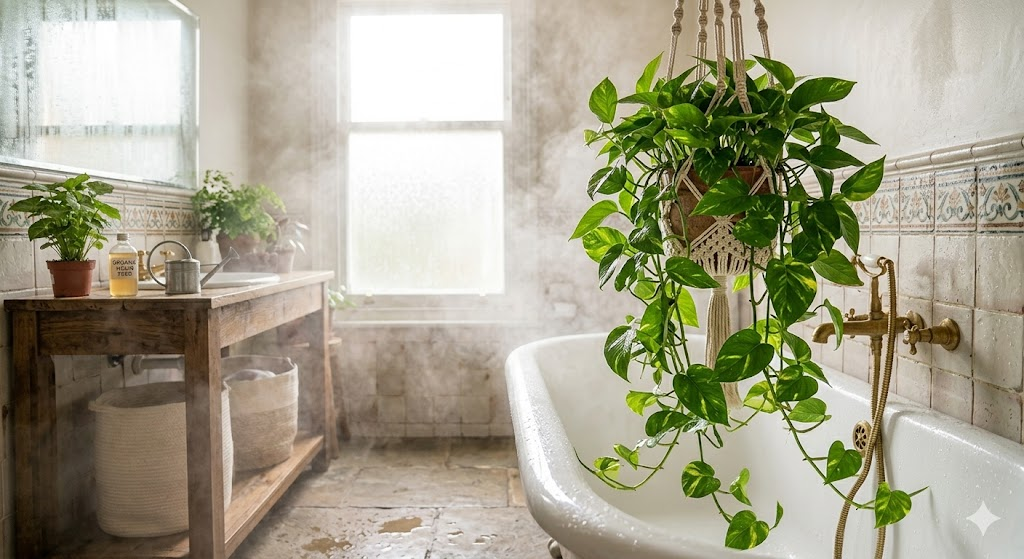
Coming from tropical environments, pothos love a bit of “stuffy” air. The best humidity for pothos new leaves is between 50% and 70%. If your home is very dry (especially in winter), the new leaves can actually get “stuck” in the sheath and come out deformed or torn.
As for the best temperature for pothos new growth, keep your room between 65°F and 85°F. I once left a Pothos near an AC vent. The cold draft convinced the plant it was winter, leading to pothos plant dormancy. It didn’t grow for four months until I moved it to a warmer, draft-free spot.
6. The “Haircut” Trick: Pruning for Growth
It sounds counterintuitive, but sometimes you have to take away to get more. If you have a very long vine with no leaves near the top, the plant is spending all its energy pushing sap all the way to the end of that “tail.”
The best pruning method for pothos new leaves is to cut the vine back to about 6 inches from the soil line. Make the cut just below a node. This “shocks” the plant into activating dormant buds further up the stem.
Don’t throw away those cuttings! Use them for pothos plant propagation. Stick them in a jar of water, and once the roots are an inch long, you have a new plant. This is the best way to fill out a “thin” looking pot.
7. Checking for Uninvited Guests
Sometimes, the reason for no growth is that something else is eating the energy. Pothos plant pests like mealybugs or spider mites are tiny but devastating. Mealybugs look like little bits of white cotton in the leaf joints. They suck the sap, causing pothos yellow leaves and stunted growth.
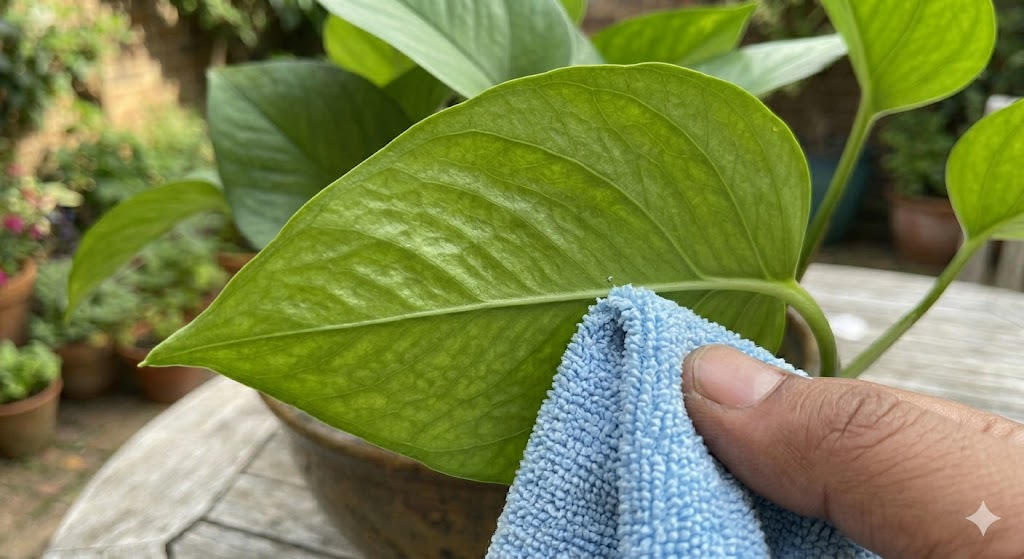
I make it a habit to wipe down my leaves with a damp cloth every two weeks. This removes dust (which blocks light) and lets me check for bugs before they become an infestation.
Real-World Lessons: My “Golden” Failure
A few years ago, I had a Golden Pothos that I was sure was dying. The leaves were turning yellow, and it hadn’t grown a leaf in six months. I tried more water, then less water. I tried more light, then shade. Nothing worked.
Finally, I pulled it out of the pot. The soil smelled like a swamp. Even though I wasn’t watering often, the pot had no drainage hole. The water was just sitting at the bottom, rotting the roots. I trimmed away the black, mushy roots, repotted it in a terra cotta pot with a hole, and used a fresh soil mix. Within three weeks, a tiny green spike appeared. The lesson? Drainage is non-negotiable.
Summary Table: Pothos Growth Checklist
| Issue | Symptom | The Fix |
| Low Light | Small leaves, slow growth | Move to bright, indirect light |
| Poor Nutrients | Pale leaves, no new buds | Use balanced liquid fertilizer monthly |
| Root Bound | Roots exiting drainage holes | Repot in a 2-inch larger container |
| Overwatering | Yellow leaves, mushy stems | Allow soil to dry; check for root rot |
| Dry Air | Brown tips, stuck leaves | Increase humidity or mist the plant |
Frequently Asked Questions
Why are my pothos leaves so small?
Small leaves are almost always a result of low light. In the wild, pothos climb trees and their leaves get massive as they reach the sun. If your plant is trailing downward in a dim room, it will produce smaller and smaller foliage.
Can I use coffee grounds to make my pothos grow?
While coffee grounds contain nitrogen, I don’t recommend putting them directly on the soil. They can retain too much moisture and lead to mold. Stick to a dedicated houseplant fertilizer for more predictable results.
How long does it take for a pothos to grow after repotting?
It usually takes 2 to 4 weeks for a plant to overcome “transplant shock.” During this time, it is focusing on establishing roots in the new soil, so don’t worry if you don’t see new leaves immediately.
Why is my pothos only growing one long vine?
This is called apical dominance. To fix it, prune the vine. This forces the plant to branch out from other nodes, creating a bushier look.
Is my pothos dormant in winter?
Yes, most houseplants slow down significantly when the days get shorter and temperatures drop. If your plant stops growing in December, it’s likely just resting. Reduce watering and stop fertilizing until spring.
By following these human-tested steps—focusing on light, the right pot, and consistent observation—you can turn any “stuck” plant back into a thriving centerpiece. Remember, gardening isn’t about being perfect; it’s about learning what your plants are trying to tell you. Happy growing!
Thank You For Visiting Our Website https://celltostem.site/
“When your vine completely stalls and stops producing foliage, it is usually a sign that it has run out of vital resources. Before guessing the cause, study our comprehensive checklist of pothos plant care tips and tricks to accurately diagnose and resolve what is blocking your plant’s growth.”