
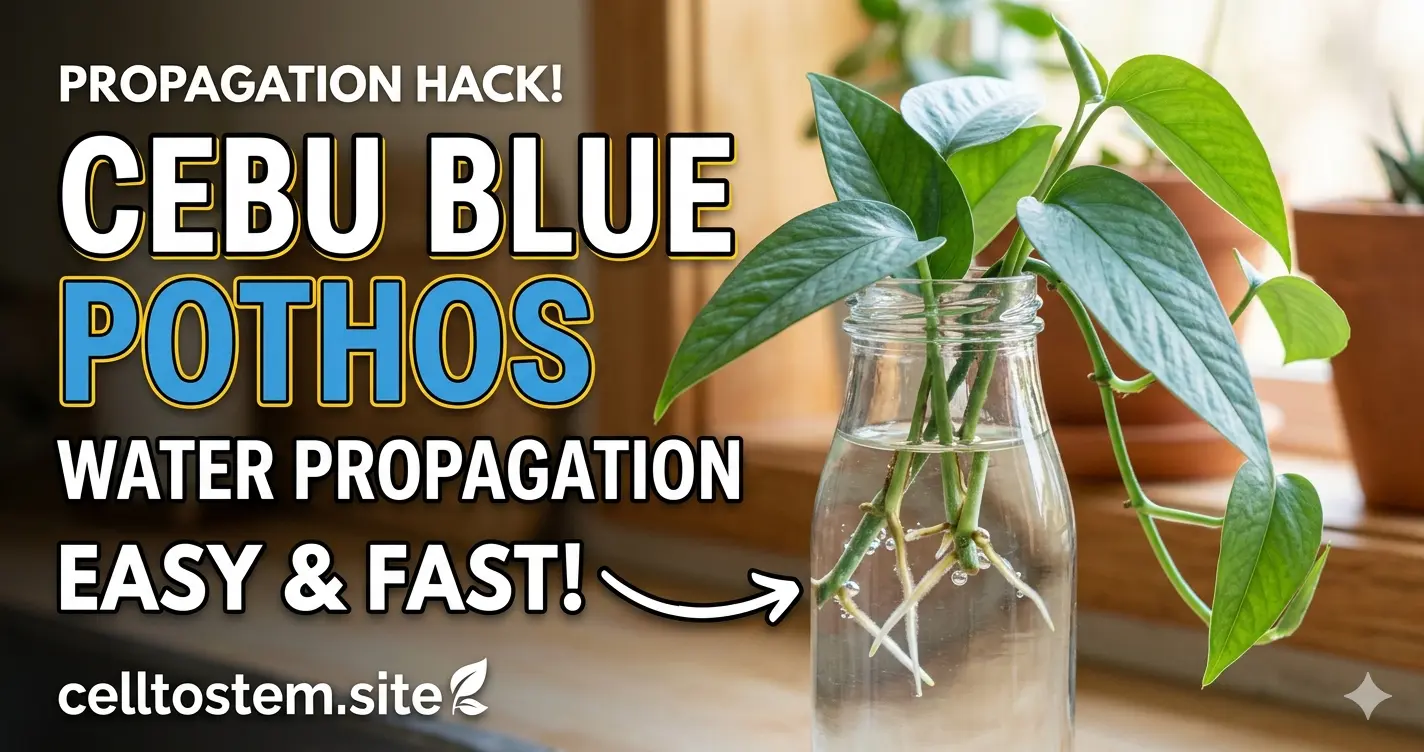
The Quick Answer: Success in 3 Steps
If you’re in a hurry, here is the secret sauce: Take a cebu blue pothos cutting with at least one node (the little brown bump), place it in a jar of filtered water, and put it in bright, indirect light. You’ll see roots in about two weeks!
Why Cebu Blue Pothos is a Must-Have
The Cebu Blue Pothos (Epipremnum pinnatum) is a rockstar in the plant world. Its silvery-blue, lance-shaped leaves look like something out of a fairy tale. Unlike the common Golden Pothos, the Cebu Blue feels a bit more “boutique,” yet it’s just as easy to grow.
Learning how to grow pothos from cuttings is the best way to turn one plant into a whole jungle. Whether you want to gift a jar to a friend or fill up a bare shelf, pothos water propagation is the most satisfying way to do it.
Best Time of Year to Propagate Cebu Blue Pothos in Water
While you can propagate year-round indoors, the best time of year to propagate cebu blue pothos in water is during the spring and summer. This is when the plant is naturally pushing out new growth. During these months, the “mother plant” has more energy, and your cuttings will strike roots much faster than they would in the sleepy winter months.
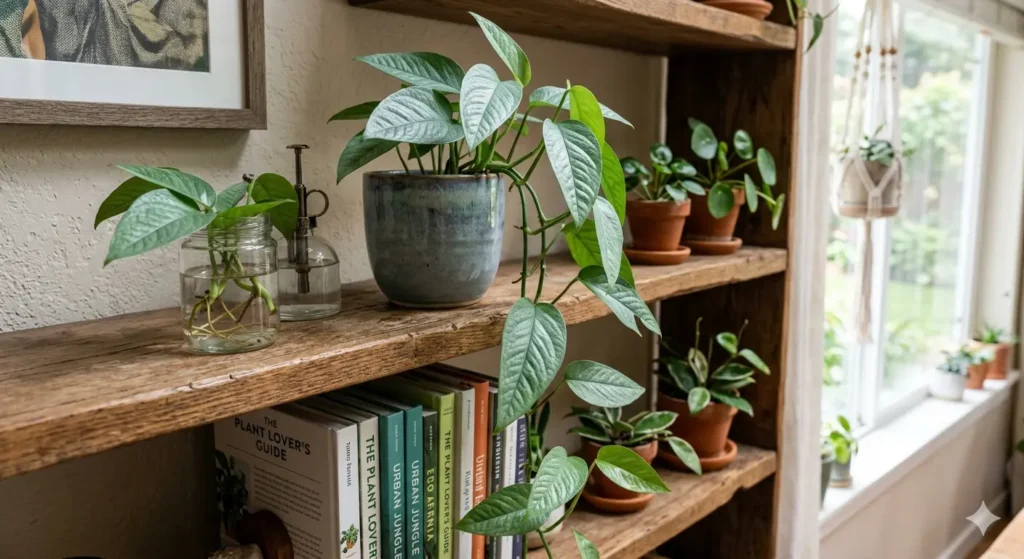
Essential Gear: Best Tools for Cebu Blue Pothos Propagation
Before you start snipping, grab the right gear. Using dull or dirty tools can bruise the stem or introduce bacteria, leading to rot.
- Sharp Pruning Snips: Clean cuts heal faster.
- Rubbing Alcohol: To disinfect your blades.
- Glass Jars: The best container for cebu blue pothos water propagation is clear glass. This lets you monitor root growth without disturbing the plant.
- Filtered Water: More on this in a second!
If you want to dive deep into the science, check out some of the best books on pothos propagation like The Plant Propagator’s Bible. For those who prefer video, the best youtube channels for cebu blue pothos propagation often include “Planterina” or “Kaylee Ellen,” where they show these techniques in real-time.
Step 1: Taking the Perfect Cutting
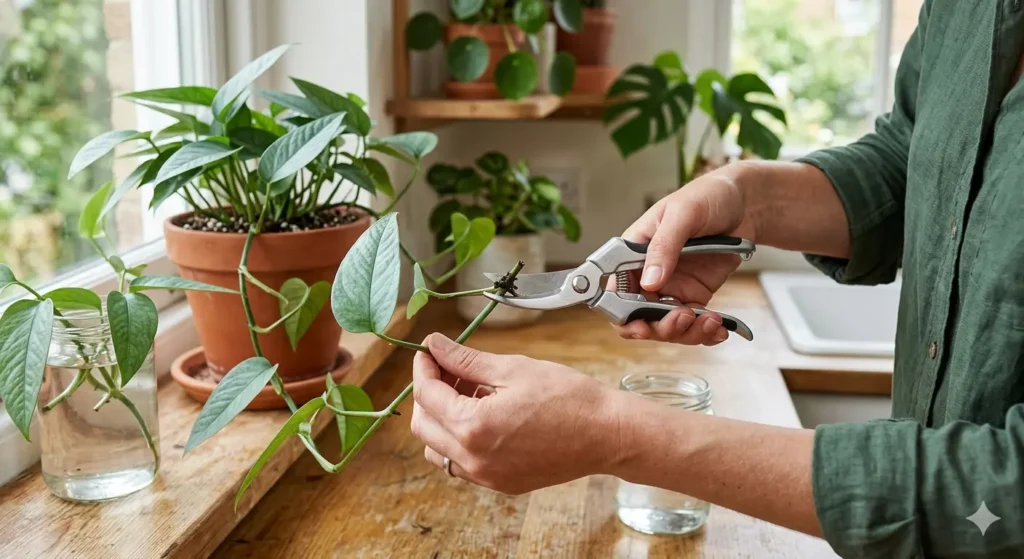
Not every leaf will grow into a new plant. You need a node. The node is that small, raised bump on the vine where the leaf meets the stem. This is where the magic happens—it’s the only place roots can grow from.
Identify a healthy vine and cut about half an inch below a node. Ensure your cebu blue pothos cuttings have at least 2–3 leaves. Remove the bottom-most leaf so the node is “naked” and ready to be submerged.
Step 2: Choosing Your Water and Light
The best water for propagating cebu blue pothos is filtered water or rainwater. If you use tap water, let it sit out for 24 hours so the chlorine can evaporate.
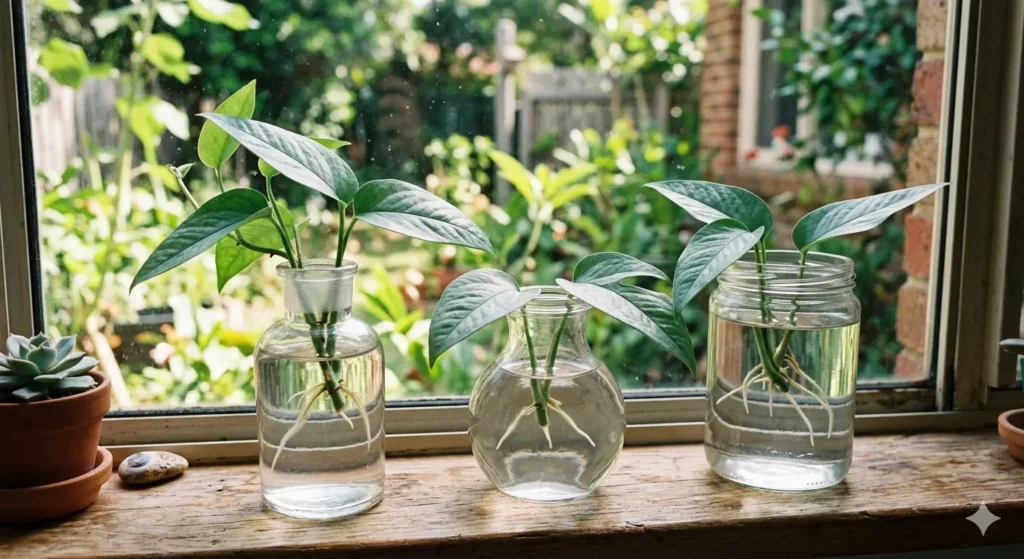
Now, let’s talk about the best light conditions for cebu blue pothos water propagation. You want bright, indirect light. Think of a spot near a north or east-facing window. Never put your jars in direct, hot sun; it will cook the delicate cuttings and grow algae in your water.
Step 3: Boosting Your Growth
Most people just use water, but if you’re a perfectionist, you can use the best rooting hormone for cebu blue pothos. While usually used for soil, a tiny dip in a liquid seaweed solution or a hormone gel can speed things up.
Once your cutting is in the jar, change the water once a week. This keeps oxygen levels high and prevents the water from getting “funky.”
Moving from Water to Soil
Once the roots are at least 2 inches long, it’s time to move them to a pot. Don’t wait too long! If the roots get too used to water, they have a harder time adjusting to soil.
Use a chunky, well-draining potting mix. After the move, your plant might look a little sad for a few days—this is normal “transfer shock.” Keep the soil slightly more moist than usual for the first week to help it transition.
Post-Propagation Care
After your plant is established, you’ll want the best fertilizer for cebu blue pothos after water propagation. Use a balanced, liquid indoor plant food diluted to half strength. This gives the “baby” plant the nutrients it needs to start producing those iconic blue leaves.
Troubleshooting Common Issues
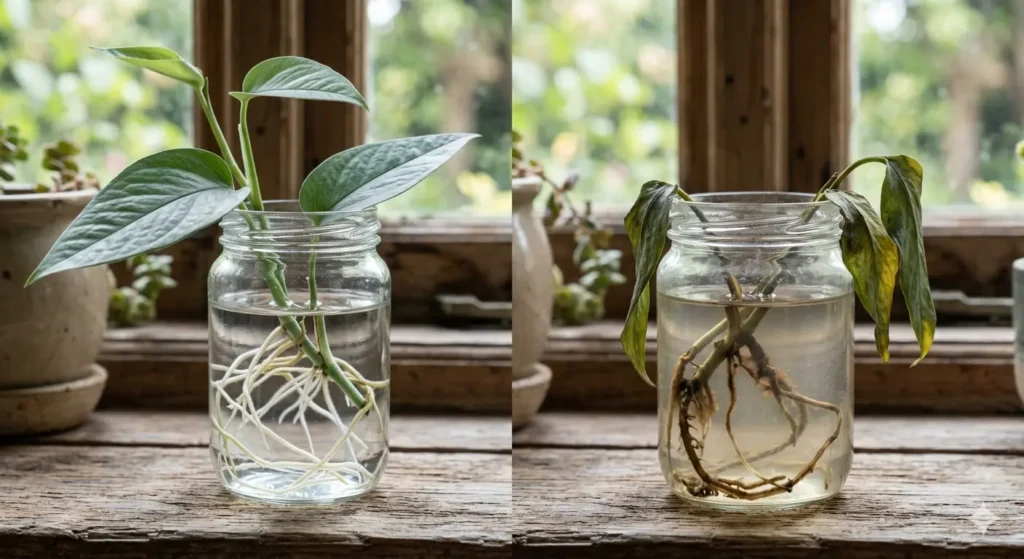
- Yellowing Leaves: This is often a sign of too much sun or the water being too cold.
- Mushy Brown Stems: This is root rot. Usually caused by dirty water or not cleaning your tools.
- No Roots after 3 Weeks: Move the jar to a warmer spot. Heat is a major trigger for root growth.
Level Up Your Skills
If you’ve caught the “propagation bug,” there are plenty of best online courses for plant propagation on platforms like Skillshare or Udemy. They cover advanced indoor plant propagation methods like air layering or using perlite instead of water.
While you’re at it, keep an eye out for the cebu blue pothos variegated version. It’s rare and much more expensive, but the water propagation technique remains exactly the same!
Summary Checklist
| Feature | Requirement |
| Light | Bright, Indirect |
| Water Type | Filtered or Rainwater |
| Best Container | Clear Glass Jar |
| Rooting Time | 2 to 4 Weeks |
| Best Season | Spring / Summer |
Because the Cebu Blue cultivar can sometimes react poorly to soggy soil mixes, many growers transition them to soil-less mediums. You can use these exact same cutting steps to attempt the propagation of golden pothos in leca for an easy semi-hydroponic experience.
Thank You For Visiting Our Website celltostem